
बेचते वक़्त
The questions your own buyer will ask you, asked now
Every question you should ask when buying gets asked back on the day you sell; here is the file, the record and the boundary that decide your price then.

On this page
Nobody owns land forever. One day the questions a careful buyer asks get pointed back at you, in the same order, by somebody who has read more than you did. A complete file, a revenue record in your name, a boundary anybody can walk and no dues outstanding are what decide your price then. All four are cheap now and expensive later.
The table turns
When you are buying, a thin answer costs you nothing. You walk away and look at the next plot. When you are selling, a thin answer costs you money, because the buyer does not walk away. They stay, and they negotiate. Every gap you accepted on the day you bought is a discount you hand over on the day you sell, with interest for the years in between.
That is the whole argument of this guide. The checks in the rest of the series are not only about protecting yourself as a buyer. They are about building the file that a stranger will one day read across a table.
आज की ढील, कल का मोल-भाव।
Aaj ki dheel, kal ka mol-bhaav.
The file is the thing you are really selling
Two identical plots in the same lane do not fetch the same price. The one with a complete file goes faster and closes higher, and the difference is an afternoon's work done years earlier. Start the folder the week you buy, not the month you list, and keep the originals together.
| The paper | What it proves | |
|---|---|---|
| 1 | Your sale deed (रजिस्ट्री), and the deed of the person who sold to you if you have it | The chain of ownership; a chain is worth more than a single link |
| 2 | The mutation (नामांतरण) | That the revenue record carries your name; pull a fresh copy, not the one from the year you bought |
| 3 | The diversion order or intimation (डायवर्जन) | That land once agricultural may be used for what you are selling it as |
| 4 | The layout sanction (स्वीकृत नक़्शा) | That the colony was approved and your plot number appears on the drawing |
| 5 | Receipts for tax paid | That the plot has been looked after; dated, in order, and current |
| 6 | The colony's approval papers | What the colony itself was approved under, and by whom |
Gaps in a run of receipts get read as gaps in care, and a buyer who suspects one kind of neglect starts looking for others.

फ़ाइल पूरी, तो सौदा आसान।
File poori, to sauda aasaan.
The one that surfaces late: mutation
Registering the sale moves the property to you. Mutation moves your name onto the revenue record. They are two separate acts, done at two different offices, usually months apart, and the second is the one that quietly never happens. Nobody notices until the day somebody wants to pay you.
Here is what that day looks like. Your buyer's advocate pulls the current record and finds the person who sold to you still standing on it. Nothing is wrong with your title; the registered deed is what carries ownership, and courts have held that a mutation entry by itself neither creates nor extinguishes title. But the deal now waits on an office, and waiting is where a price gets renegotiated.
The edge they see first
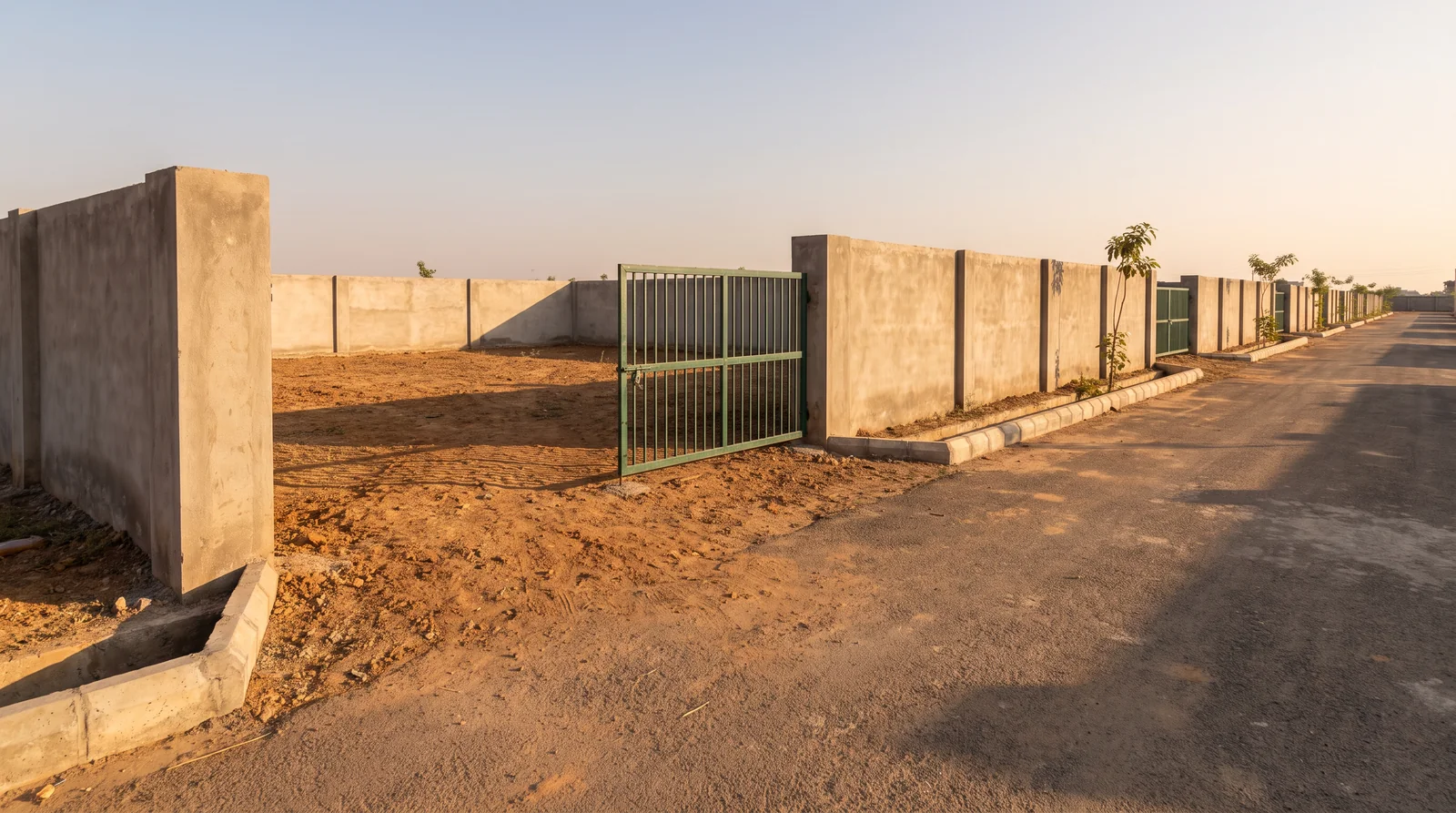
Before a single paper is opened, a buyer walks the plot, and the boundary is the first question they answer for themselves. A plot that is walled and cornered, with corners that agree with the sanctioned layout, settles the question before it is asked out loud. Open ground gets paced, doubted, and quoted lower.
शक़ की भी क़ीमत लगती है।
Shak ki bhi keemat lagti hai.
A pending due is never just the due
A buyer who finds one unpaid bill does not simply subtract it from your price. They subtract it, and then they begin to wonder what else went unattended for as many years. Clear everything before you quote a figure, and be able to show it:
- property tax, paid to date, with the receipts in hand;
- society or maintenance dues, with a letter saying nothing is pending;
- water and electricity charges, if a connection was ever taken in your name;
- anything else still owed on the plot, disclosed by you on day one rather than found by them.
बकाया पहले चुकाइए, दाम बाद में लगाइए।
Bakaya pehle chukaiye, daam baad mein lagaiye.
The tax question is not ours
What the sale does to your own tax turns on dates, amounts and circumstances that belong to you alone. That is a chartered accountant's question, not a land record's, and the useful time to ask it is before you agree a price rather than after the deed is signed.
They will read the record before they read you
Your colony has a public page: its recorded boundary, its sanctioned layout, its master-plan zone, and the papers on file. Your buyer will open it before they call you, and so will the relative in another city they forward it to. As of September 2026 there are 1,161 colonies and projects on it. That is the quiet argument for having bought somewhere that reads well in the first place.
See it for yourself on the map — boundaries, plans and paperwork on one screen.
Open your colony's page and read it the way your buyer will →Questions people ask
What documents do I need to sell a plot?
Your sale deed and ideally the previous one, a current mutation copy in your name, the diversion order or intimation, the sanctioned layout showing your plot, tax receipts to date, and the colony's approval papers.
Is mutation necessary to sell property?
Ownership passes by the registered deed, and a mutation entry by itself does not create title. But a buyer's advocate will pull the revenue record, and if it still names the previous owner the sale waits on an office while your price gets renegotiated.
Why does a buyer care about old property tax receipts?
A gap in receipts is read as a gap in care. One unpaid bill is subtracted from the price and then treated as a sign that other things were left unattended.
Does a boundary wall increase the resale value of a plot?
A walled plot with corners that match the sanctioned layout removes the buyer's first doubt before it is spoken. Open ground gets paced, questioned and quoted lower.
Who should I ask about tax on selling land?
A chartered accountant, before you agree a price. The answer depends on your dates, amounts and circumstances.
Where the facts come from. The facts and figures in this post come from verified government sources and verified RERA-registered brokers.
Indori Zameen is a private platform. It is not a government body and is not affiliated with one — always confirm a record with the concerned authority before you commit money.
Share this post
Related posts
 Papers & law8 min read
एक दिन — और ज़िंदगी भर का काग़ज़।
Papers & law8 min read
एक दिन — और ज़िंदगी भर का काग़ज़।
Registry day: what happens, and mutation afterwards
Stamp duty, the four-month clock, Aadhaar at the counter, e-registration from home, and why a registered deed still leaves mutation to be done.
8 Sep 2025 Papers & law10 min read
क़ब्ज़े के बाद
Papers & law10 min read
क़ब्ज़े के बाद
After you own it: property tax and municipal records
Who taxes your plot, why the seller stays liable until the record is changed, and what a tax receipt does and does not prove about ownership.
8 Sep 2025 Papers & law8 min read
सरहद का झगड़ा।
Papers & law8 min read
सरहद का झगड़ा।
How boundary disputes start, and the cheap half of avoiding them
Boundary disputes begin as a few feet nobody measured. The six ways a line goes wrong, and the five cheap things to do before you build.
8 Sep 2025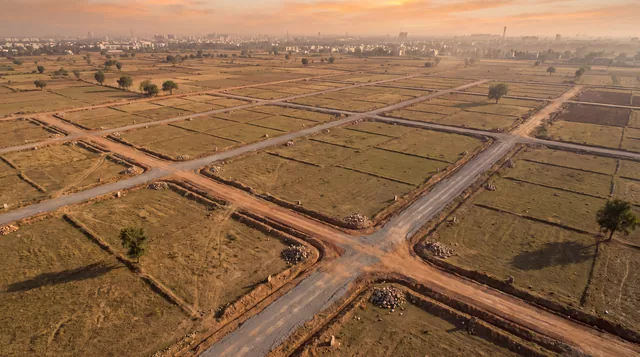 Money7 min read
ज़मीन एक। सवाल अलग-अलग।
Money7 min read
ज़मीन एक। सवाल अलग-अलग।
Buying to live vs buying to invest
A home and an investment are different purchases of the same land. Five questions where the answers pull apart, and the one record both of them begin on.
8 Sep 2025Tagged resale, checklist, instagram-series, mutation, boundary.
Read it. Then check it on the map.
Every colony's boundary, its approved layout, its zoning and its paperwork — on one screen. Signing in is free.