
क़ब्ज़े के बाद
After you own it: property tax and municipal records
Find out who bills you, get the municipal entry into your own name, and keep the one file a lender or a buyer will ask for years from now.

On this page
- Who bills you depends on where the boundary falls
- A bill exists only because the property is in the register
- Both sides owe the Corporation a notice
- A finished house is a different property from an empty plot
- Why the boring receipt matters
- What a tax receipt does not prove
- Unpaid tax stays with the property
- Five things, one file
- Read your entry once a year
The deed makes the land yours. The municipal record does not know that yet. After registry there are three more jobs: work out which local body taxes the plot, get its entry moved into your name, and start keeping the receipts. None of it is glamorous. All of it is asked for later.
चाबी मिल गई। फ़ाइल अभी बननी बाक़ी है।
Chaabi mil gayi. File abhi banni baaqi hai.
Who bills you depends on where the boundary falls
Property tax belongs to the local body, not to the state and not to the registrar's office. The Constitution allows a state to hand a municipality or a panchayat the power to levy this tax and keep what it collects. So the first question is simply which boundary your plot sits inside. If it is within the Indore Municipal Corporation, the Corporation bills you. If it is outside, in a village, the gram panchayat does.
The two bodies tax differently, and it helps to know which rule you are under.
| Inside the Corporation (नगर निगम) | In a gram panchayat area (ग्राम पंचायत) | |
|---|---|---|
| Charged on | The gross annual letting value of the land or building | The capital value of the land and building |
| Rate set by | The Corporation, for each financial year | The panchayat's own resolution, after a public objection window |
| Paid by | The owner, in the first instance | The owner of the building |
Rates and due dates are left out of this guide on purpose. They change, and the only reliable figure is the one the Corporation zone office or the panchayat gives you this year.
A bill exists only because the property is in the register
Before anyone can send you a demand, the property has to be on the Corporation's assessment list. The Act describes what that list holds: a serial number for each set of premises, a description of it, the owner's name and address, the valuation and the amount payable. That single entry is your municipal file.
Finding your entry
Every assessed property carries a Property ID. On the state's e-Nagarpalika citizen portal you link that ID to your login, and the tax detail and any outstanding dues appear under it. Without the ID linked, there is nothing to see.
Both sides owe the Corporation a notice
When title to land or a building changes hands, the Act requires the person selling and the person buying to give written notice of the transfer to the Commissioner within three months. The duty falls on both of you. In practice the buyer is the one with the reason to do it.
The reason is the second half of the same section. A person liable for tax who transfers the property without giving that notice stays liable for the tax until the notice is given, or until the transfer is recorded in the Corporation's books. Which means a seller who forgets keeps receiving bills in his name, and a buyer who forgets has a record that still says somebody else owns the house.
This municipal transfer is not the same thing as mutation on the revenue record. Mutation puts your name into the record of the land itself; the notice under s. 167 puts it into the Corporation's tax books. You need both, and they are done at different offices.
A finished house is a different property from an empty plot
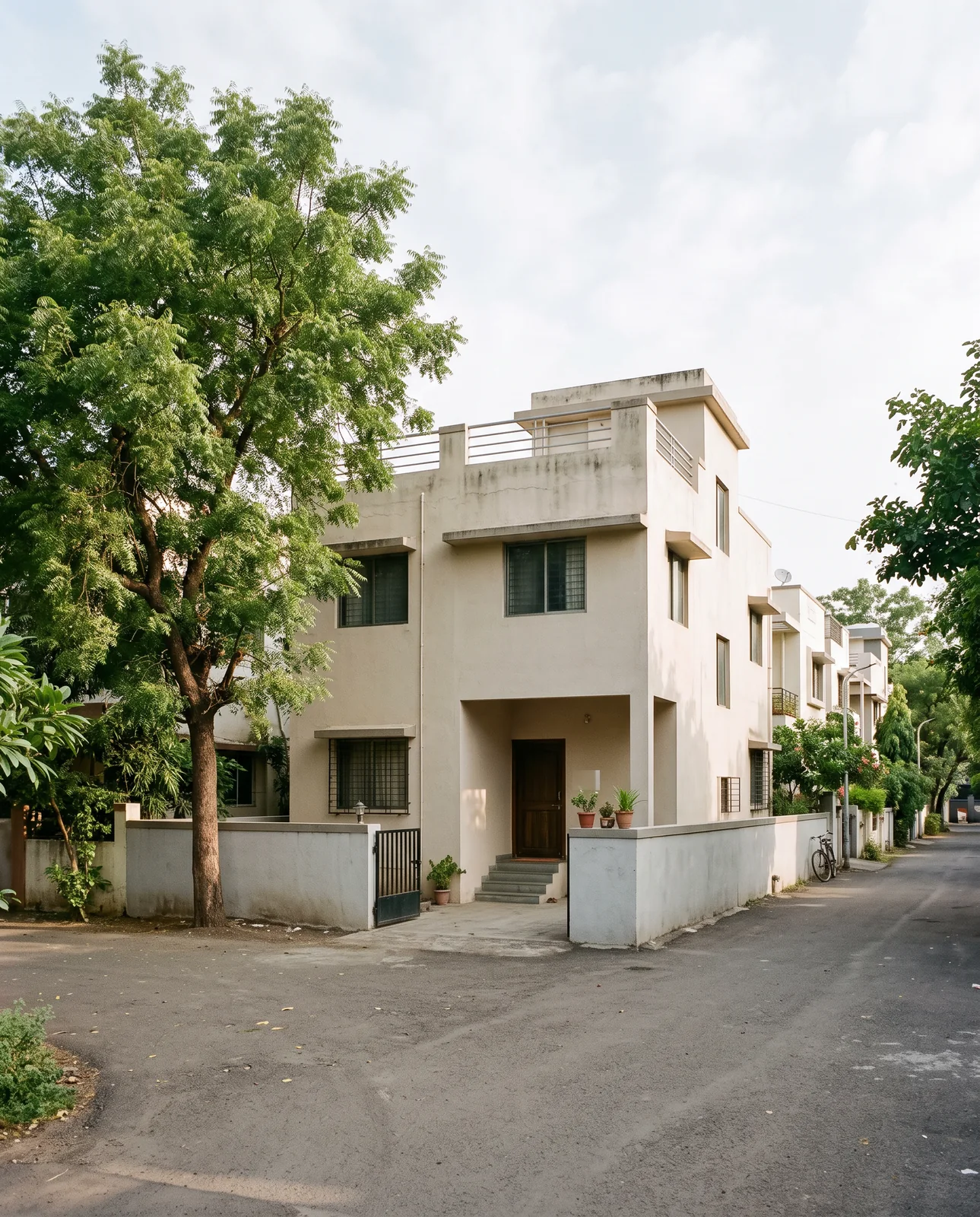
The valuation on your entry was made for what stood on the land at the time. When a building is newly put up, rebuilt, enlarged, or a vacant one is occupied again, the person primarily liable for the tax has fifteen days to tell the Commissioner in writing. The entry is then reassessed. An entry that still describes a bare plot under a two-storey house is a common finding, and it is the owner's job to correct it.
Why the boring receipt matters
Nobody asks for a property tax receipt until, one day, everybody does.
A lender asks. Bank of Baroda's published home-loan checklist lists the original receipt showing land tax paid, alongside the possession certificate, among the property papers it wants, and property tax receipts again alongside the maintenance and electricity bills.
Your own buyer asks, years later. An unbroken run of receipts in your name is the cheapest evidence you will ever hold that you were the person in possession and paying.
And the Act says you must be given one. For every sum paid on account of any tax, a receipt is to be tendered stating the amount and the tax it was paid against. Take it, and keep it.
What a tax receipt does not prove
Say this plainly, because it is the line people get wrong: a tax receipt is not proof that you own the land.
In May 2026 the Supreme Court restated the position. Revenue records serve a fiscal purpose only, and the fact that a municipality or a revenue office accepted your tax, or that a bank lent against those records, does not stop the State from questioning who actually owns the land.
So what is the receipt for? It shows you were assessed, billed and paying. That is supporting evidence, and it is worth having. Your title lives in the registered deed and the chain of documents behind it, and nowhere else.
रसीद हक़ का सबूत नहीं — हक़ काग़ज़ों की कड़ी में रहता है।
Raseed haq ka saboot nahin — haq kaaghazon ki kadi mein rehta hai.
Unpaid tax stays with the property
Arrears do not follow the person who ran them up. Under the Act, all sums due as tax on any land or building are, after land revenue owed to the Government, a first charge on that land or building, and on movable property found on it belonging to the person who owes them. The Act then lists how the Corporation may collect: a bill, a written notice of demand, distraint and sale of movables, attachment and sale of the property itself, attachment of the rent it earns, or a suit.
Five things, one file
Keep these together, in one place in the house, and add to the file rather than replacing it.
- Every tax receipt, in date order. A newer receipt does not make the older one disposable.
- The mutation order that put your name on the revenue record, and the municipal transfer if it was done separately.
- The registered deed, with the earlier deeds behind it in the order they were signed.
- The approval papers: the colony's sanctioned layout, and the building permission for whatever stands on the plot.
- The Property ID, and a note of which zone office it belongs to.
Read your entry once a year
The Commissioner must give a copy of the assessment list, or an extract from it, to anyone who applies and pays the prescribed fee. So the entry is yours to read. If the valuation or the description is wrong, the objection goes in writing by the date fixed in the public notice, and it is heard.
Two fields matter most: your name, and the area. The area on the tax entry should be the area on the colony's sanctioned layout. That is a document you can look at, plot by plot, rather than take on trust.
See it for yourself on the map — boundaries, plans and paperwork on one screen.
Open the colony and compare its sanctioned layout with your tax entry →Questions people ask
Who pays property tax on a plot in Indore, the buyer or the seller?
The owner. After a sale, the seller stays liable under the Municipal Corporation Act until notice of the transfer is given or the Corporation's books are changed, so the buyer should give the notice promptly.
Is a property tax receipt proof of ownership?
No. The Supreme Court restated in May 2026 that revenue records serve only a fiscal purpose. A receipt is supporting evidence of possession and payment; title rests on the registered deed and the chain behind it.
How do I find my Property ID in Indore?
On the MP e-Nagarpalika citizen portal, or from the Corporation zone office the property falls under. Linking the ID to your login opens the tax detail and any dues.
What happens if the previous owner did not pay property tax?
Unpaid tax is a first charge on the land or building itself, after land revenue. It can be recovered from the property regardless of who owned it when the arrears arose.
Do I need to inform the Nagar Nigam after building a house on my plot?
Yes. When a building is newly erected, rebuilt, enlarged or re-occupied, the person liable for the tax has fifteen days to tell the Commissioner in writing so the property can be reassessed.
Is municipal transfer the same as mutation?
No. Mutation changes the revenue record of the land. The notice under s. 167 changes the Corporation's tax books. Both are needed, at different offices.
Where the facts come from. The facts and figures in this post come from verified government sources and verified RERA-registered brokers.
Indori Zameen is a private platform. It is not a government body and is not affiliated with one — always confirm a record with the concerned authority before you commit money.
Share this post
Related posts
 Papers & law8 min read
एक दिन — और ज़िंदगी भर का काग़ज़।
Papers & law8 min read
एक दिन — और ज़िंदगी भर का काग़ज़।
Registry day: what happens, and mutation afterwards
Stamp duty, the four-month clock, Aadhaar at the counter, e-registration from home, and why a registered deed still leaves mutation to be done.
8 Sep 2025 Indore8 min read
नगर निगम के अंदर या बाहर?
Indore8 min read
नगर निगम के अंदर या बाहर?
Inside or outside municipal limits: gram panchayat or IMC
Inside IMC or in a gram panchayat: who sanctions the colony, who lets you build, who owns the pipe and who sends the bill, and how to find out before you pay.
8 Sep 2025 Papers & law8 min read
काग़ज़ों के शब्द
Papers & law8 min read
काग़ज़ों के शब्द
Seven words on your papers: khasra, khatauni, diversion, FAR, mutation and more
Khasra, khatauni, diversion, layout sanction, guideline rate, FAR and setback, mutation: what each word on your plot's papers means, and why it matters.
8 Sep 2025 Money7 min read
बेचते वक़्त
Money7 min read
बेचते वक़्त
The questions your own buyer will ask you, asked now
One day you are the seller, and every gap in your file becomes a discount. The five things to get in order years before you list a plot.
8 Sep 2025Tagged imc, mutation, instagram-series, gram-panchayat, checklist.
Read it. Then check it on the map.
Every colony's boundary, its approved layout, its zoning and its paperwork — on one screen. Signing in is free.