
ज़मीन एक। सवाल अलग-अलग।
Buying to live vs buying to invest
Two purchases that happen to involve the same land, and the five questions where their answers pull in opposite directions.
On this page
They are two different purchases that happen to involve the same asset. A home is judged by whether your family will be glad to be there in ten years; an investment by whether somebody else will pay more for it in ten. Decide which you are making before you look at a single plot, because the answer changes where, when, what and how it ends.
Most people never decide
The commonest mistake is not choosing badly. It is never choosing at all. A buyer sets out to find a place to build a house, gets talked into "an area that is going to grow", and ends up with a plot that is neither a good home nor a good investment. Or the other way round: shopping for a return, they fall for a pretty corner on a quiet lane and buy a house-plot that nobody else particularly wants.
A plot that is perfect to live on can be a poor investment. A plot that will double in price can be a hard place to raise a family. Neither is a contradiction; they are simply answers to different questions.
| Buying to live | Buying to invest | |
|---|---|---|
| The question | Will we be happy here in ten years? | Will this be worth more in ten years? |
| The judge | Your family | Your future buyer |
| The exit | May never come | Is the whole point |
घर या निवेश — तय कीजिए, फिर देखिए।
Ghar ya nivesh — tay kijiye, phir dekhiye.
Five questions where the answers pull apart
1. Location: close to your life, or close to the plan?
Living. Close to the school run, the hospital, the office. You will drive that road twice a day for twenty years, so measure it in minutes at eight in the morning, not in kilometres on a map. A plot that is fifteen minutes further from everything is fifteen minutes further every single day.
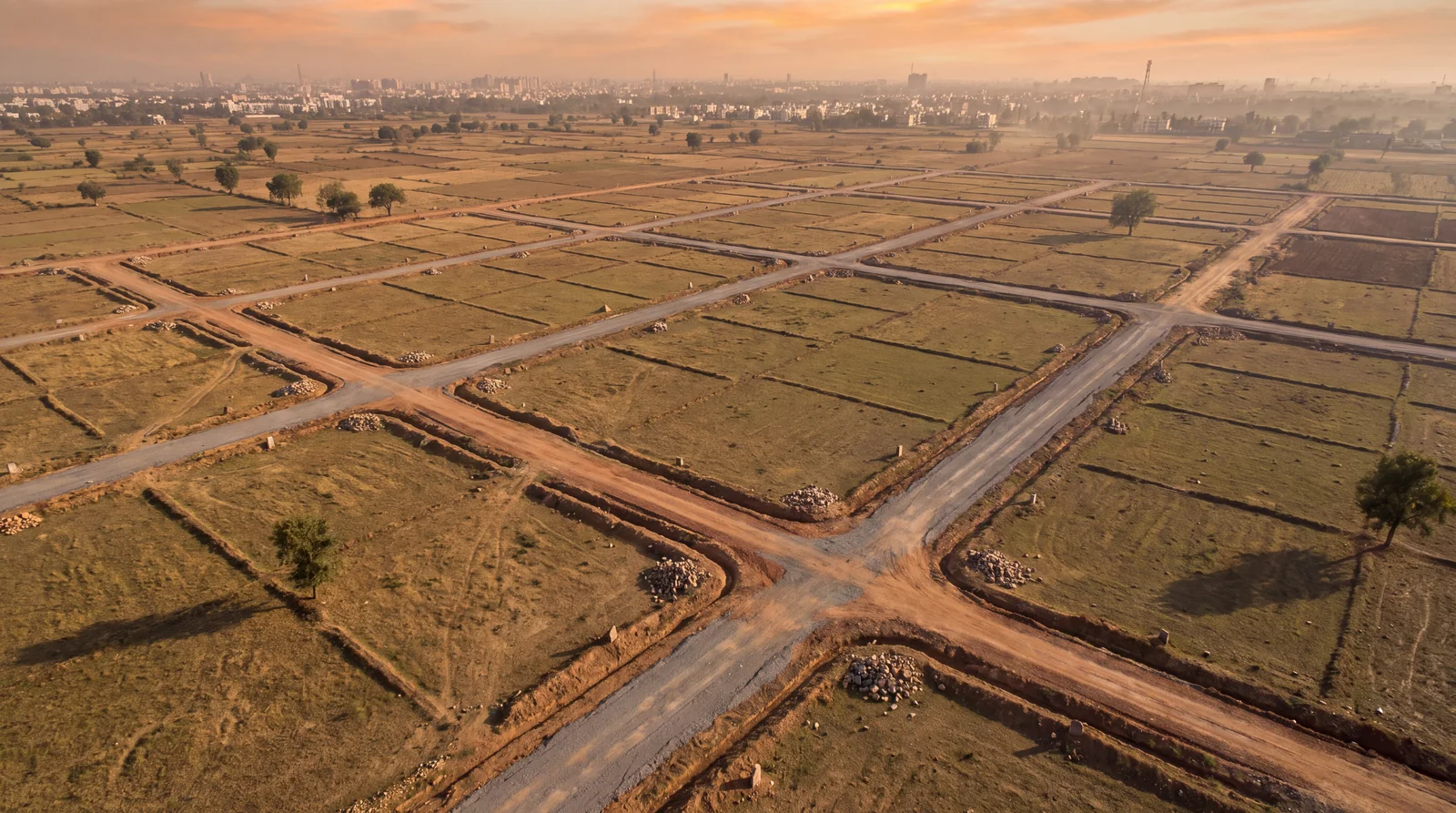
Investing. Close to where the city is going next: the proposed roads, the metro corridor, the zone the master plan has already changed on paper but the ground has not caught up with. The proposed network and the zoning are drawn on the master plan, and the plan can be read before the road exists.
2. Timing: when you need it, or when it is cheap?
Living. When the family needs the house. Waiting two years for a better rate costs two years of rent and two years of somebody's childhood, and neither comes back.
Investing. Before the plan becomes a road. The gap between what has been approved and what has been built is where the return lives, and it closes the day the tarmac is laid.
3. The plot: a good house, or a good resale?
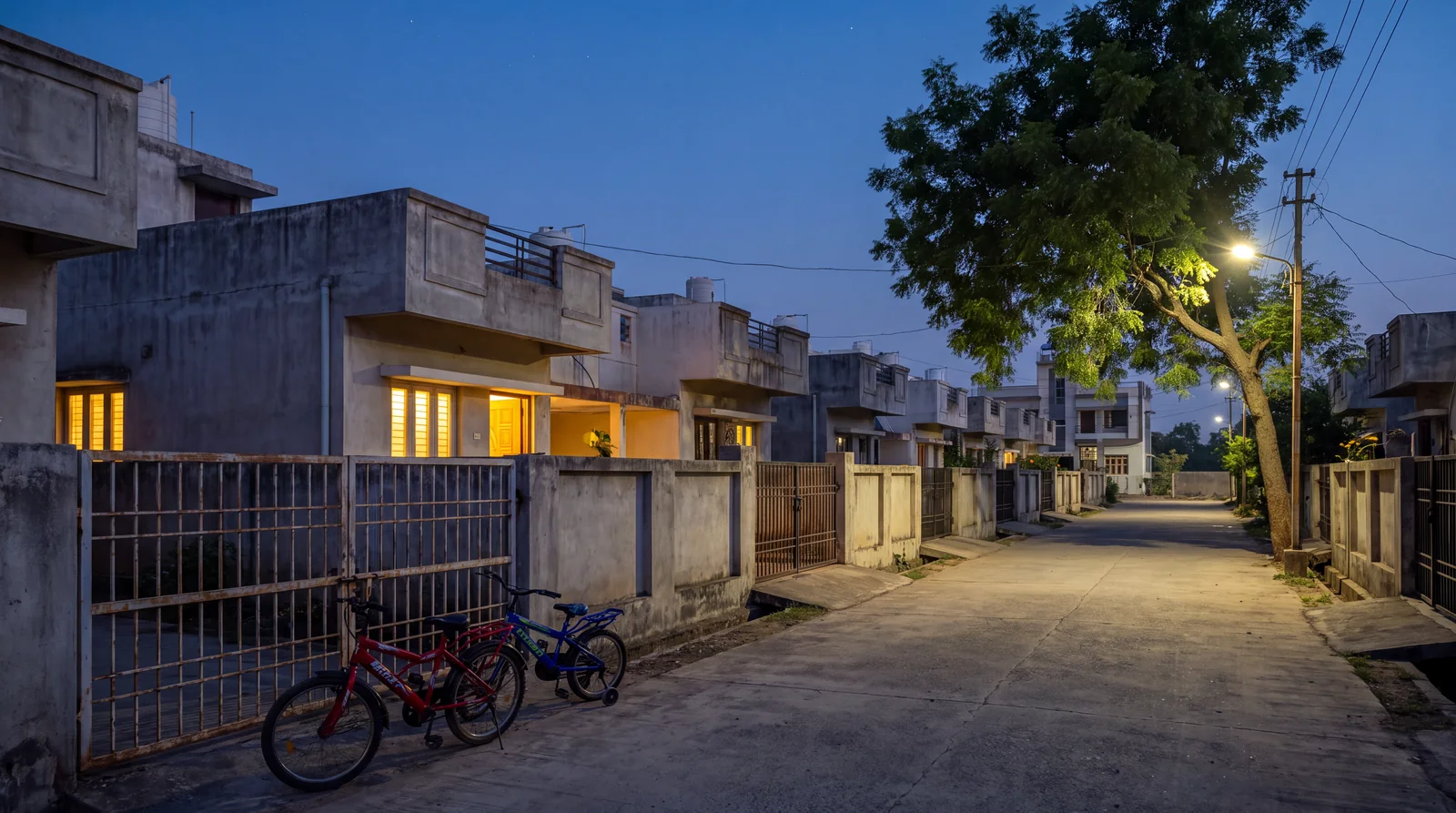
Living. Shape, light, the width of the road outside, who the neighbours are. A corner plot on a 12 m road lives very differently from a strip on a 9 m lane: more frontage, more light, more traffic. Those are things you feel every morning.
Investing. Clean title, clear approvals, an easy story. Your future buyer will ask exactly the questions you should be asking now, and they will ask them in a hurry, with their own lawyer in the room. A plot you can explain in five minutes sells; a plot with a footnote does not.
जो आपने पूछा, वही अगला भी पूछेगा।
Jo aapne poochha, wahi agla bhi poochhega.
4. Risk: a hard life, or a dead asset?
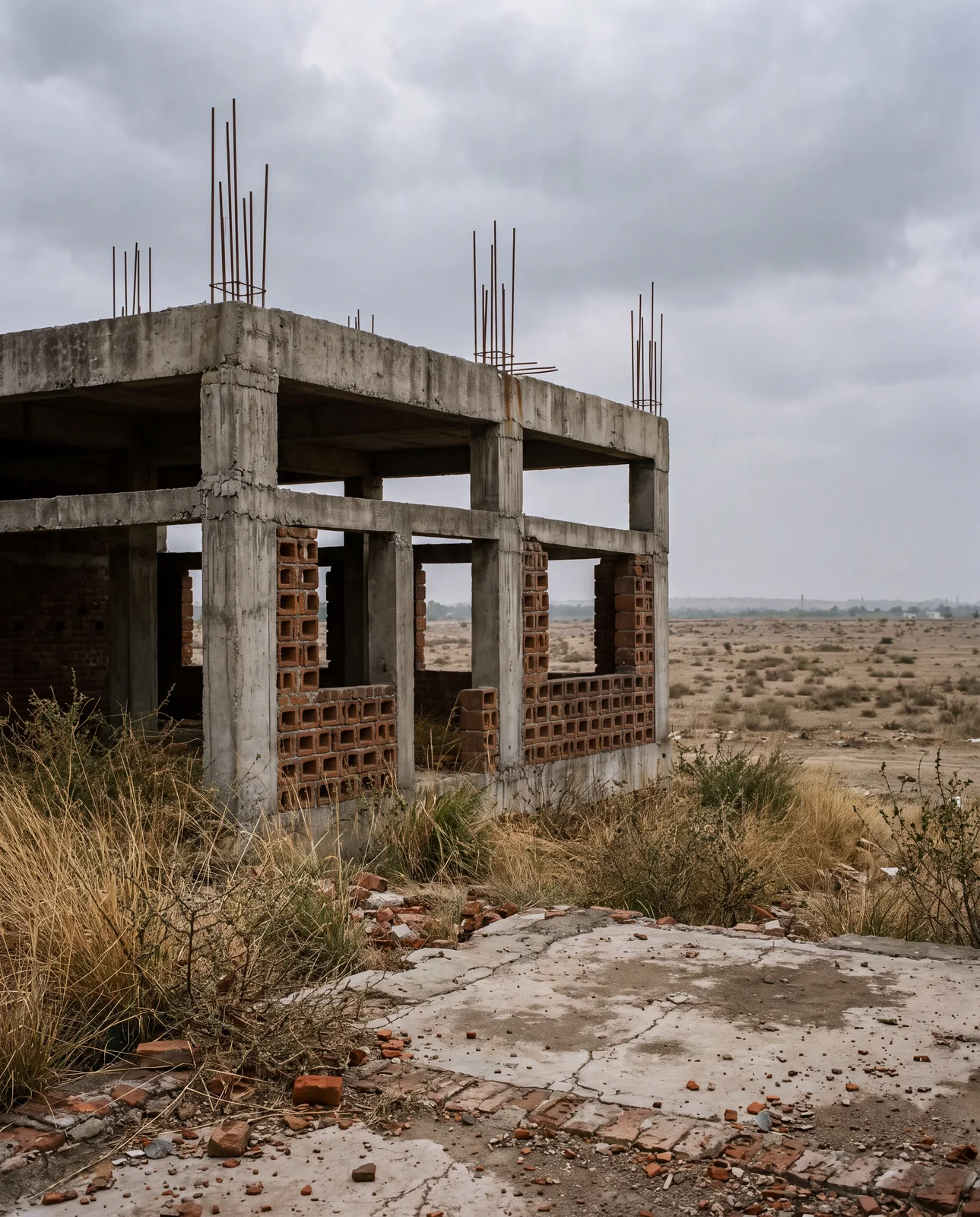
Living. No water, no sewer, no building permission. A colony without its sanction is not a paperwork problem for the person who lives there; it is a daily one. Building on a plot needs the written permission of the local body, inside the city or out, and a colony that was never sanctioned makes that permission the first thing to go wrong.
Investing. A plot nobody else will buy either. The investor's worst case is not an uncomfortable house; it is an asset that cannot be sold because nobody can explain it. Land you cannot describe in five minutes is land you will not sell in five months.
5. The exit: you may never sell, or you definitely will
Living. The exit may never come, and if it does it will be decades away. So buy for the years in the middle: the mornings, the neighbours, the walk to the shop. Do not buy for the day at the end.
Investing. The exit is the entire point. Decide on day one who buys it from you, what they will need to see and how long you can afford to wait for them.
The one thing both have in common
Different questions, same first step. The boundary as recorded, the sanctioned layout, the master-plan zone, the proposed roads and the documents on file: the buyer who wants a home and the buyer who wants a return open exactly the same page, and take opposite decisions from it. One reads the 12 m road as a commute; the other reads it as a resale line. One reads the zone as "can we build a house here"; the other reads it as "what will be built around here". The record does not change. The reading does.
Where both purchases start
Every mapped colony and project in Indore, as of September 2026 1,161 of them, with its boundary, its sanctioned layout, its zone and its papers on one page, so that either answer is an informed one.
See it for yourself on the map — boundaries, plans and paperwork on one screen.
Read the plot's zone, layout and proposed roads before deciding which purchase it is →Questions people ask
Is buying a plot in Indore a good investment?
That depends on whether you are buying to invest at all. An investment plot is judged by whether the next buyer will pay more and how easily you can explain it to them. A plot that is a good home is not automatically a good investment, and the reverse is also true.
Should I buy a plot to build a house or as an investment?
Decide before you look. The two purchases answer different questions about location, timing, what makes a plot good, what can go wrong and how it ends. Shopping for one and buying the other is the commonest mistake.
What should I check before buying a plot for investment?
Clean title, clear approvals and an easy story, because your buyer will ask the same questions in a hurry. Then the master plan: proposed roads, the metro corridor and any zone that has changed on paper but not yet on the ground.
Does a wider road increase plot value?
A corner plot on a 12 m road lives differently from a strip on a 9 m lane, with more frontage and more light, and a future buyer reads the road width too. Check the width on the sanctioned layout, not on the brochure.
What is the biggest risk when buying a plot to live on?
An unsanctioned colony. No water, no sewer and no building permission are not paperwork problems for the family living there; they are daily ones.
Where the facts come from. The facts and figures in this post come from verified government sources and verified RERA-registered brokers.
Indori Zameen is a private platform. It is not a government body and is not affiliated with one — always confirm a record with the concerned authority before you commit money.
Share this post
Related posts
 Indore7 min read
ब्रोशर नहीं, शहर पढ़िए।
Indore7 min read
ब्रोशर नहीं, शहर पढ़िए।
Read the city, not the brochure: judging a location yourself
Zone, roads, distance, neighbours, register: five reads that tell you what a location in Indore already is, without a single phone call.
8 Sep 2025 Money7 min read
बेचते वक़्त
Money7 min read
बेचते वक़्त
The questions your own buyer will ask you, asked now
One day you are the seller, and every gap in your file becomes a discount. The five things to get in order years before you list a plot.
8 Sep 2025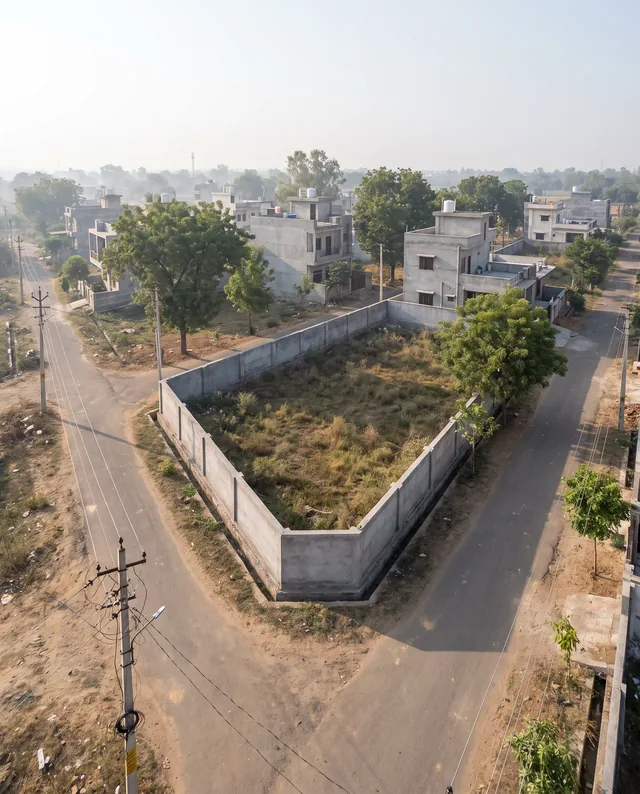 Buying guides8 min read
कोना और दिशा
Buying guides8 min read
कोना और दिशा
Corner plot, east-facing: what actually changes
A corner gives you two open sides and a bill for them; a facing decides where the sun and the gate go. What is measurable, what is preference, what matters.
8 Sep 2025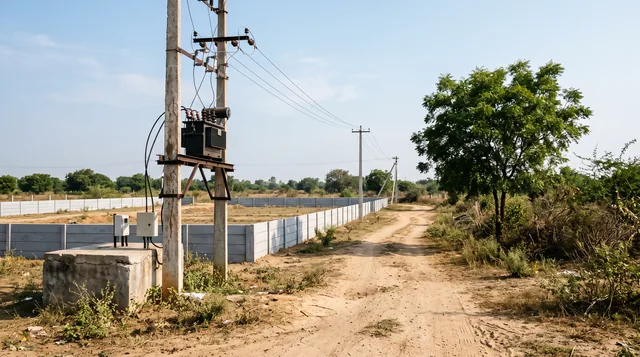 Buying guides8 min read
सुविधा है या वादा?
Buying guides8 min read
सुविधा है या वादा?
Is the colony serviced? Power, water, sewer
A gate, a road and a wall can be finished years before a working connection. Six questions and one visit after dark tell you what you are really buying.
8 Sep 2025Tagged investment, plot, resale, instagram-series.
Read it. Then check it on the map.
Every colony's boundary, its approved layout, its zoning and its paperwork — on one screen. Signing in is free.