
प्लॉट पर लोन
Plot loans are not home loans
How much less a lender funds on bare land, the clock inside some sanctions, and the four questions about the ground you can answer before the bank asks them.
On this page
A plot loan is a different product from a home loan, sold at the same counter. Lenders fund a smaller share of the price, over fewer years, sometimes with a deadline to build, and the interest deduction most buyers budget for does not begin until a house exists. And before the bank reads your file, it reads the land.
The first surprise: it is not a home loan
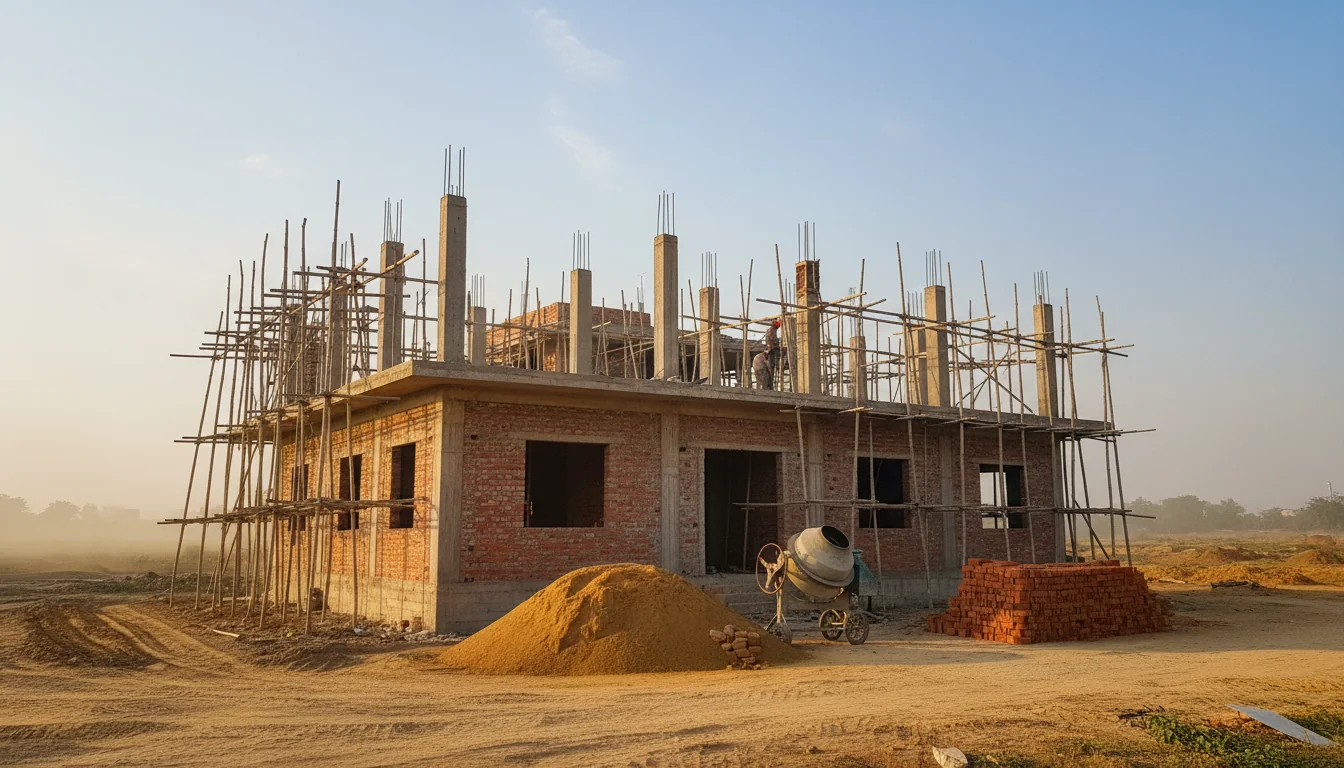
A home loan is lent against a house — one already standing, or going up on a sanctioned project — that the lender can see, value and if necessary sell. Ask for the same thing on a bare plot and you are handed a different form, because the security you are offering is ground and a promise about what will stand on it.
The banks say so themselves. State Bank of India sells a product it calls the Realty Home Loan to customers who want to "purchase a plot for construction of a dwelling unit"; HDFC Bank publishes a page explaining the difference between its home loan and its land loan. Two products under one roof, and the differences begin with the amount.
Two numbers move the moment it is land
| A built house | Bare land | |
|---|---|---|
| Share of the value a lender will fund | 75–90% | 70–80% |
| Longest tenure on offer | 20–30 years | 15 years |
HDFC Bank and Kotak Mahindra Bank both cap a land loan at 75–80 per cent of value, against 75–90 per cent for a home loan, and both cap its tenure at fifteen years. PNB Housing Finance puts plot funding at 70–75 per cent. Home loans run to thirty years at HDFC and twenty at Kotak.
Three lenders, three answers — and that is the point. The figure is your lender's, not the market's, and the gap between ninety per cent of the price and seventy is cash you must find yourself.
Ask what the product is really called
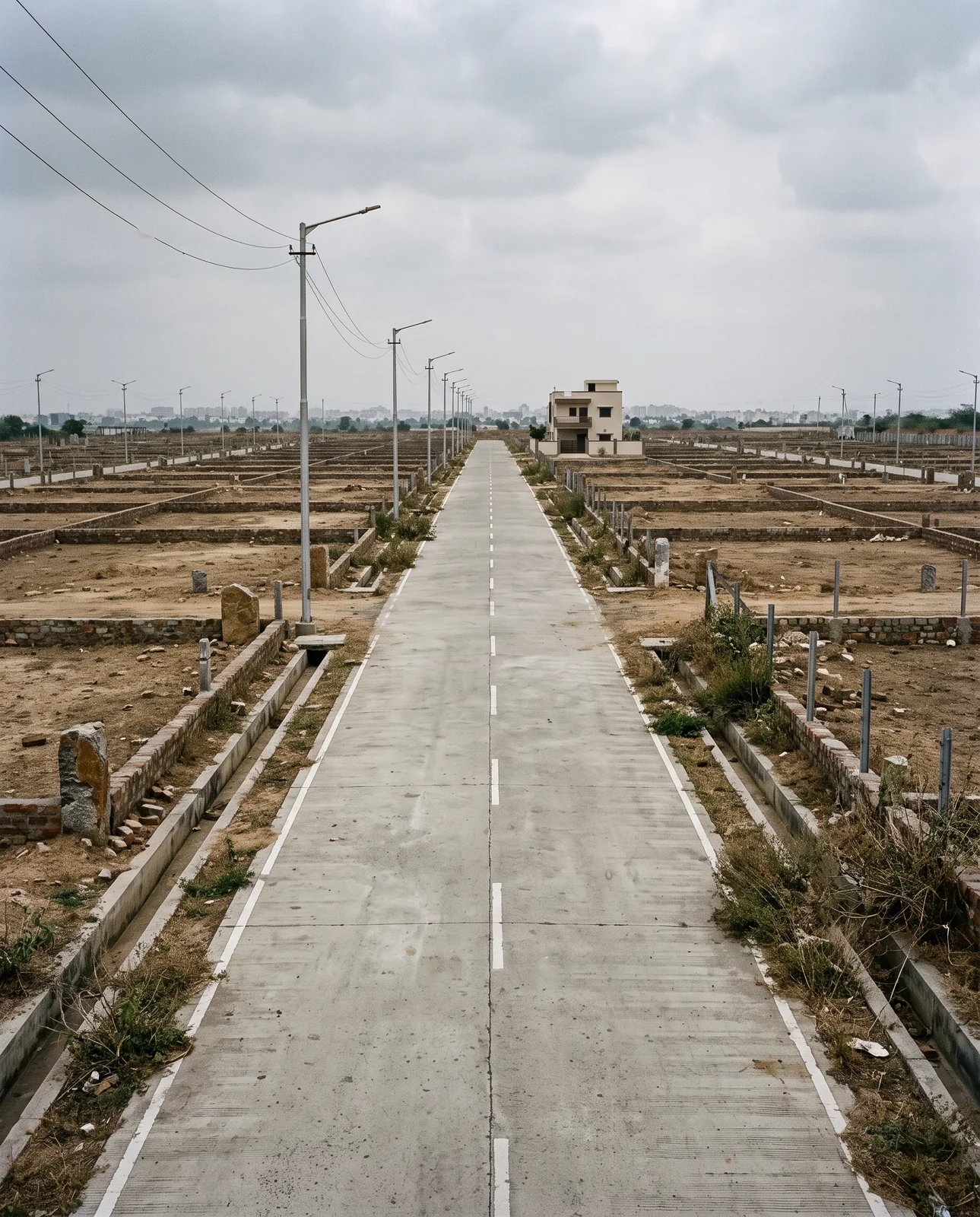
Much of what is sold over the counter as a "plot loan" is, on the sanction letter, a composite loan: one sanction with two halves, the land and the house to be built on it. Ujjivan Small Finance Bank describes its own as a single loan for buying a plot and building a home on it, both halves under one sanction.
The construction half is released in instalments as the building rises, and interest runs only on what has actually been paid out. You are not really being lent a plot; you are being lent a house that does not exist yet.
Some sanctions carry a clock
Because the lender is financing a house, some products expect it to appear. On SBI's Realty Home Loan the condition is explicit: "the construction of the house should be completed within 3 years from date the loan has been sanctioned/disbursed". Repayment runs up to fifteen years; the building must be up within three. It sits on page four of the sanction letter and is not mentioned at the counter, and conditions differ by lender and product, so read your own.
The tax break is not there yet
The deduction most people have in mind is the one for home-loan interest under section 24(b) of the Income Tax Act. It attaches "where the property has been acquired, constructed, repaired, renewed or reconstructed with borrowed capital". While the plot is bare earth there is no house to set the interest against.
The interest is not lost: the Act allows interest paid before the property is acquired or constructed to be deducted in five equal instalments, starting in the year construction is finished. But it is not claimed now, and two lenders say it bluntly on their own pages — a land loan by itself carries no tax benefit. Nothing here is tax or financial advice; take your own case to a professional.
The bank is checking the ground, not only you
Salary slips, bank statements and a credit score are half the file. The other half is about the land, and it is the half that stops most refused applications. Union Bank of India, for instance, finances plots "duly approved by the statutory authority of the State Government", and for a private layout wants government approval along with the approved maps. That is the shape of every lender's legal and technical check.
फ़ाइल आप पर नहीं, ज़मीन पर अटकती है।
Fail aap par nahin, zameen par atakti hai.
The lender's own four questions
- Is the colony approved, and by whom? A sanction from the planning authority. A plot map drawn by the seller is not an approval.
- Is there a sanctioned layout? Not the brochure plan — the drawing the authority stamped, with your plot on it at its real size.
- Is the title chain clean? PNB Housing lists a clear legal title to the plot among the things a plot loan turns on. A break in the chain stops the file.
- Is it residential land, in the right zone? Kotak states that the land should be within municipal and residential zones. Undiverted farmland is a different conversation, and usually a shorter one.
Read the land before the valuer does
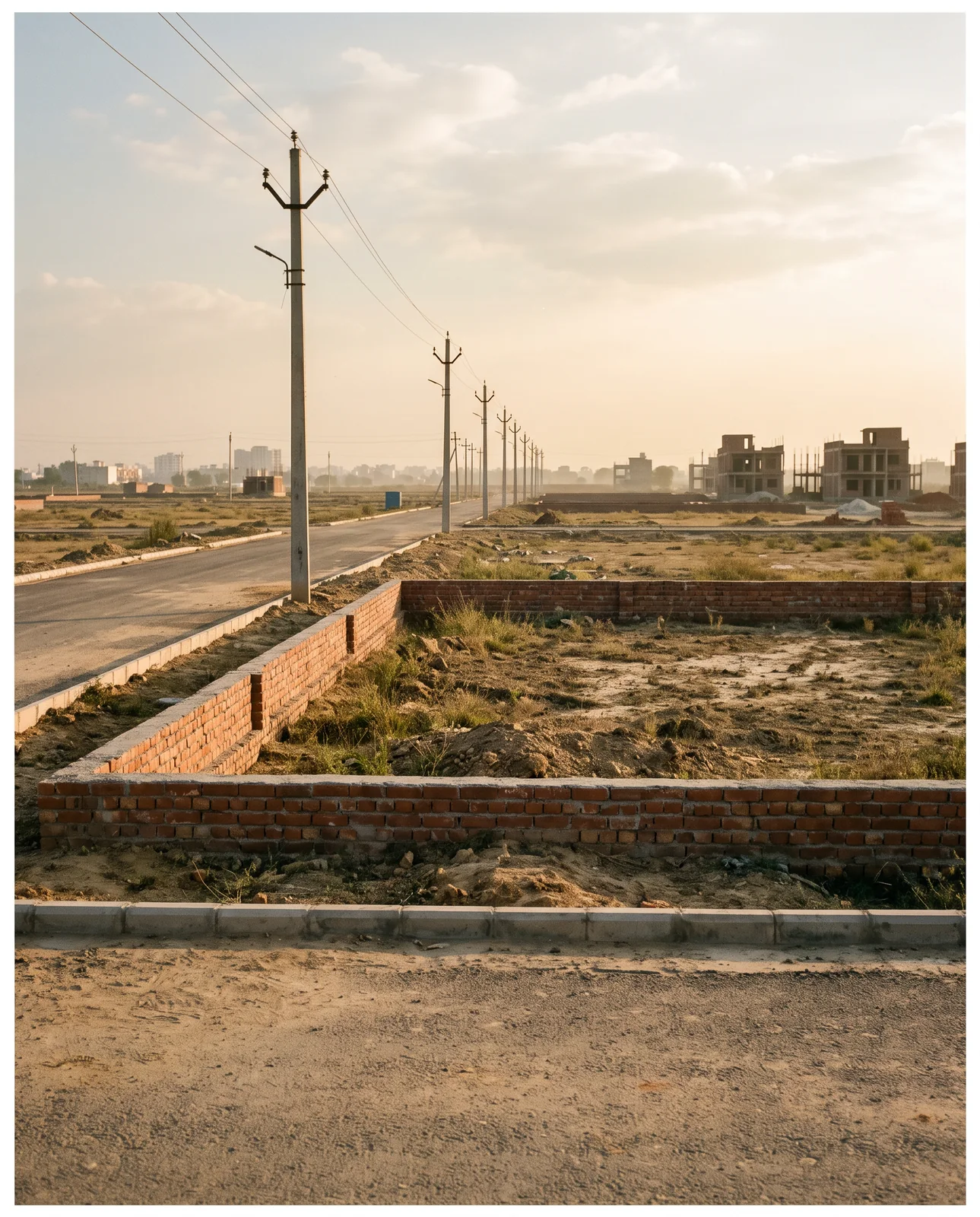
All four questions can be answered before you fill in a form. The colony's registration, its sanctioned layout, its master-plan zone and the papers on record are what the bank's check looks for, and a refused file costs months and often a booking amount. On this platform they sit on one screen per colony — 1,161 colonies and projects mapped, 13,352 documents and 86 georeferenced sanction plans as of September 2026. Look at the land the way the lender will, then go to the bank.
बैंक से पहले आप जाँच लीजिए।
Bank se pehle aap jaanch lijiye.
See it for yourself on the map — boundaries, plans and paperwork on one screen.
Check the colony's registration, layout and zone before your bank appointment →Questions people ask
Can I get a home loan to buy a plot?
Usually not as a home loan. Banks sell a separate plot or land loan, or a composite loan covering the plot and the construction under one sanction, on terms that differ from a home loan.
How much loan can I get on a plot?
Lenders' own published figures run from about 70 to 80 per cent of the value for bare land, against 75 to 90 per cent for a built house. Ask your lender for its figure in writing.
Do I have to build a house after taking a plot loan?
Some products require it. SBI's Realty Home Loan asks for construction to be completed within three years of sanction or disbursement. Read your own sanction letter for the condition.
Is there a tax benefit on a plot loan?
Not while the land is bare. Section 24(b) attaches the deduction to a property that has been acquired or constructed; earlier interest can be claimed in five instalments from the year construction is complete. Take your own case to a tax professional.
Where the facts come from. The facts and figures in this post come from verified government sources and verified RERA-registered brokers.
Indori Zameen is a private platform. It is not a government body and is not affiliated with one — always confirm a record with the concerned authority before you commit money.
Share this post
Related posts
 Money7 min read
सौदा बनाम ख़र्च
Money7 min read
सौदा बनाम ख़र्च
The price is not the cost: stamp duty, guideline rate and the real total
On a ₹50 lakh plot you pay ₹55.25 lakh before a brick is laid. How stamp duty and the guideline rate work in Madhya Pradesh, and the four costs that come after.
8 Sep 2025 Buying guides7 min read
ज़मीन ख़रीदने से पहले
Buying guides7 min read
ज़मीन ख़रीदने से पहले
Five checks before you buy land in Indore, each with its red flag
Five two-minute checks on any plot in Indore — registration, khasra, zone, proposed roads, sanctioned plan — and the red flag hiding inside each one.
8 Sep 2025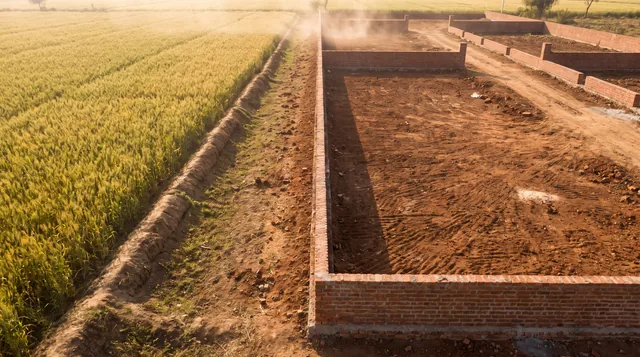 Papers & law9 min read
खेत से प्लॉट तक
Papers & law9 min read
खेत से प्लॉट तक
Farmland to plots: what diversion changes, and what it does not
Diversion only changes what a parcel is assessed for on the revenue record. The two permissions that must follow, and which paper to ask for by date.
8 Sep 2025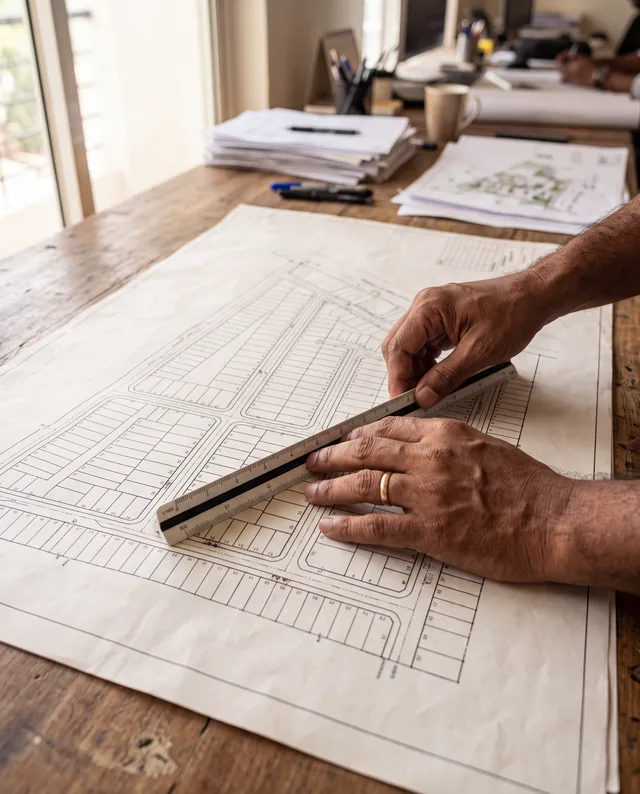 Maps & plans8 min read
नक्शा पढ़ना सीखिए।
Maps & plans8 min read
नक्शा पढ़ना सीखिए।
How to read a sanctioned layout plan
Plot numbers, road widths, open space, the reserved series and boundary lengths: how to read each one off a sanctioned layout plan before you pay.
8 Sep 2025Tagged loan, plot, instagram-series, layout-plan, checklist.
Read it. Then check it on the map.
Every colony's boundary, its approved layout, its zoning and its paperwork — on one screen. Signing in is free.