
ज़मीन ख़रीदने से पहले
Five checks before you buy land in Indore, each with its red flag
Registration, khasra, zone, proposed road and the sanctioned plan — about ten minutes, in this order, before the token.
On this page
- Why the papers get checked once
- Check 1 — Is it a registered colony at all?
- Check 2 — Is the khasra on the paper the land you were shown?
- Check 3 — What has the city zoned it for?
- Check 4 — Is a proposed road crossing your plot?
- Check 5 — Is the sanctioned plan what you see on the ground?
- The routine, in this order
- Before the token, not after
Before the token on a plot in Indore, check five things: is the colony registered, is the khasra on the papers the land you stood on, what the master plan zones it for, does a proposed road cross it, and does the sanctioned layout agree with the ground. Two minutes each, and a red flag inside each.
Why the papers get checked once
For most families a plot is the largest cheque they will ever write, and the price receives a care the paperwork never does. The rate is asked about five times, from five people. The papers are glanced at once, usually after the token, when the questions have already lost their force.
दाम पांच बार पूछते हैं। काग़ज़ एक बार भी नहीं।
Daam paanch baar poochhte hain. Kaagaz ek baar bhi nahin.
None of the five needs a lawyer to begin, and each has cost somebody in this city a great deal of money because it was asked too late.
Check 1 — Is it a registered colony at all?
The first question is whether the colony exists on any register: a sanction from the planning authority, a registration with the regulator where the size demands one, a legal status the record can state. A colony that exists only as a drawing in the seller's hand may be perfectly honest, but nothing outside that hand vouches for it.
An unapproved colony is hard to build on, hard to get services for and — the part people discover last — hardest of all to sell again. Your buyer will ask the question you skipped.
Check 2 — Is the khasra on the paper the land you were shown?
Every piece of land in Madhya Pradesh is recorded under a khasra number in its village, and the sale deed describes your plot by the khasra the colony stands on. The land you walked on and the land in the papers are supposed to be the same; they are not always.
The khasra numbers a colony stands on are listed on its record beside its village and tehsil. Read them off the papers you are being asked to sign and compare. One wrong digit, and you have paid for a field somebody else owns and will never hand over.

Check 3 — What has the city zoned it for?
The development plan for Indore colours every piece of land by the use the city intends for it: residential, commercial, industrial, public and semi-public, green belt, agricultural. A plot sold for a house on land the plan has coloured for something else is a plot the authority will not sanction a house on, whatever is said about "conversion later".
This is a two-minute check on the Master Plan Portal. Find the colony, read the colour under it, and read the legend.
Check 4 — Is a proposed road crossing your plot?
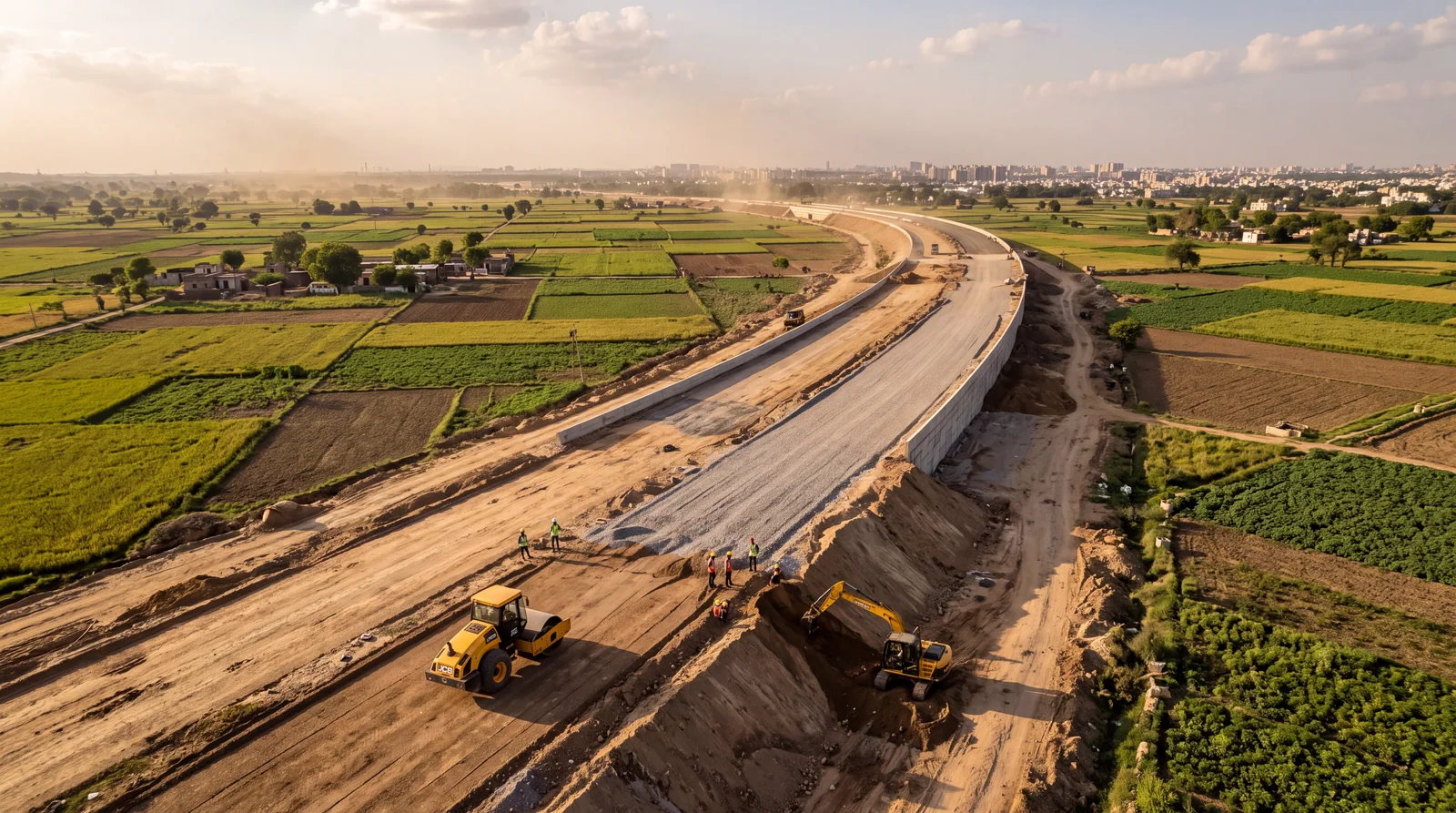
The same plan draws the roads the city intends to build, including ones that do not exist yet. A proposed road is a line on a drawing today. On the day it is built it takes the land it was drawn across — and the owner of that land is informed, not consulted.
Indore is preparing Master Plan 2035 to succeed the 2021 plan, and proposed alignments are exactly the kind of thing that changes between one plan and the next — so check again when the new one is notified.
Check 5 — Is the sanctioned plan what you see on the ground?
The layout the planning authority sanctioned is a drawing with every plot, road and reserved open space on it, each at its real size. Laid over a satellite image of the colony, it shows at a glance whether what has been marked out on the ground is what was approved on paper.
The common gap is a plot number that means one thing in the brochure and another on the sanctioned sheet. The expensive gap is a plot that is not on the sheet at all, because the land it sits on was reserved as open space or road — and has been sold anyway.
The routine, in this order
- Is the colony on a register at all?
- Do the khasra numbers in the papers match the land?
- Which zone is it in on the master plan?
- Does a proposed road cross it?
- Is the sanctioned layout what is on the ground?
The order matters: there is no point reading the khasra of a colony that is on no register.
Before the token, not after
The token is the moment the questions stop being free. Once money has moved, every question becomes a question about getting it back, and the answers get slower.
पहले देख लीजिए। फिर हाँ कहिए।
Pehle dekh lijiye. Phir haan kahiye.
On this platform the five answers sit on one screen for each colony: the boundary as recorded, the registration status, the khasra numbers, the master-plan zone and the sanctioned layout over the satellite view — 1,161 colonies and projects mapped as of September 2026, with 13,352 documents on file behind them.
See it for yourself on the map — boundaries, plans and paperwork on one screen.
Run all five checks on the colony you are looking at →Questions people ask
How do I check if a colony in Indore is approved?
Look for it on a register: the planning authority's sanction, the MP RERA portal where the project is large enough to need registration, and the colony's record on the map here, which states its legal status.
How do I check the khasra number of a plot in Indore?
The sale papers describe the plot by khasra; compare that number with the khasra the colony's record lists for its village and tehsil, and with the record on MP Bhulekh. They must agree.
What happens if a proposed road passes through my plot?
When the road is built it takes the land it was drawn across, and the owner is informed of the acquisition rather than asked. Check the current plan before buying and again when Master Plan 2035 is notified.
What should I check before paying token money for a plot?
These five: registration, khasra, zone, proposed roads, and whether the sanctioned layout agrees with the ground. Do them before the token; afterwards the questions cost money.
Where the facts come from. The facts and figures in this post come from verified government sources and verified RERA-registered brokers.
Indori Zameen is a private platform. It is not a government body and is not affiliated with one — always confirm a record with the concerned authority before you commit money.
Share this post
Related posts
 Papers & law7 min read
रजिस्टर्ड है — पर किसका?
Papers & law7 min read
रजिस्टर्ड है — पर किसका?
What RERA does, and what it does not
Who must register with MP RERA, what an agent's number means, and the four checks a registration does not replace: title, ownership, coverage and sanction.
8 Sep 2025 Papers & law8 min read
काग़ज़ों के शब्द
Papers & law8 min read
काग़ज़ों के शब्द
Seven words on your papers: khasra, khatauni, diversion, FAR, mutation and more
Khasra, khatauni, diversion, layout sanction, guideline rate, FAR and setback, mutation: what each word on your plot's papers means, and why it matters.
8 Sep 2025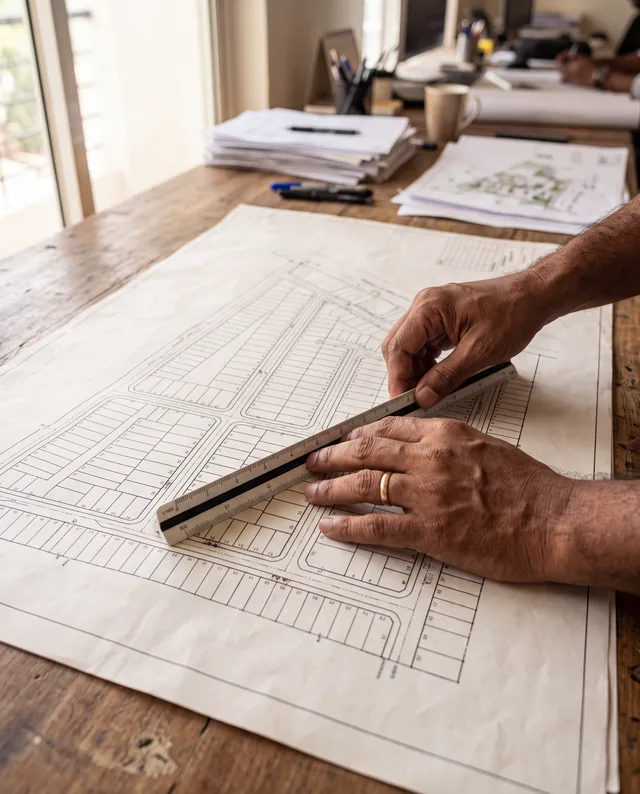 Maps & plans8 min read
नक्शा पढ़ना सीखिए।
Maps & plans8 min read
नक्शा पढ़ना सीखिए।
How to read a sanctioned layout plan
Plot numbers, road widths, open space, the reserved series and boundary lengths: how to read each one off a sanctioned layout plan before you pay.
8 Sep 2025 Indore7 min read
इंदौर का नक्शा बदल रहा है।
Indore7 min read
इंदौर का नक्शा बदल रहा है।
Indore is being redrawn: Master Plan 2035, the metro and the metropolitan region
A new master plan, a metro ring partly open, and a law that plans Indore as a region: what each changes for a plot, and where to check your own land.
8 Sep 2025Tagged checklist, rera, instagram-series, khasra, master-plan, layout-plan.
Read it. Then check it on the map.
Every colony's boundary, its approved layout, its zoning and its paperwork — on one screen. Signing in is free.