
टोकन देने से पहले
The token: the agreement that comes before the sale deed
Six things to settle in writing before the first rupee moves, and the one clause almost nobody asks for.

On this page
The token is the first money in a plot deal and the moment you hold the least paper. An agreement to sell is where the terms live: who is selling, what exactly, at what price and on what schedule, who pays which cost, by when the papers arrive, and what happens to the token if they fail.
Why the first payment matters most
By the time anybody says the words "sale deed", a booking amount has usually already changed hands — over a phone call, against a handwritten receipt, sometimes against nothing at all. From that moment on, every later negotiation starts from the position you took here. The token is small next to the price, but it is the only money that leaves your account before you have read anything.
This guide is a list of questions to settle before that happens. It is not legal advice. How the agreement is worded and executed is a lawyer's job, and against the sum at risk that fee is a small one.
पैसा पहले चलता है, काग़ज़ बाद में — चूक अक्सर यहीं होती है।
Paisa pehle chalta hai, kaagaz baad mein — chook aksar yahin hoti hai.
Money is not a document
Two different things get mixed up at this stage. The token — बयाना, the advance — is a sum paid to hold the deal while the rest is worked out. It moves on trust, and often before anybody has opened a file. The agreement to sell is a contract: it records that a sale will happen, on terms both sides have accepted. It is not the sale.
The transfer itself is the sale deed, registered later. The law is explicit that a contract for the sale of immovable property creates no interest in that property on its own. So signing an agreement gives you a claim against the seller, not a right in the land — which is exactly why every word in it matters.
| The token | The agreement to sell | The sale deed | |
|---|---|---|---|
| What it is | Money | A contract | The transfer |
| When | First | Before the balance | On registry day |
| What it gives you | A seat at the table | Terms you can hold the seller to | Ownership |
Six things to settle in writing
1. Who is selling, and are they the recorded owner?
The name on the land record and the person across the table are not automatically the same person. Ask for the recorded holder's name and compare it with the name that will sign. If the land is held jointly, every co-owner belongs on the agreement. If somebody is signing for another person — a relative abroad, a company, an elderly parent — ask on what authority, and read that authority yourself.
2. What precisely is being sold?
A plot is identified by its number on a sanctioned layout, its dimensions and its boundaries. "The one past the temple" is a direction. The agreement should name the layout the plot sits on, the plot number as it appears on that layout, the measurements, and what lies on each of its four sides.
3. The total price, and a date against every instalment
Write the whole price, then each instalment with its date. The token should appear as the first part of that price, not as a separate sum sitting beside it. A schedule has dates in it; "the rest at registry" has none.
4. Who bears which cost
Registration and stamp costs, dues pending on the land, society or maintenance charges, anything still owed to the colonizer. Name each one and allot it to a side. Whatever is left unnamed here is what gets discovered on registry day.
5. How long the seller has to produce the papers
"दो-चार दिन में दे देंगे" कोई तारीख़ नहीं है।
"Do-chaar din mein de denge" koi tareekh nahin hai.
A token buys a window: the stretch in which the seller hands over the documents and you have them read. That window belongs in writing — which papers, handed to whom, by which date, and what the position is if the date passes. Nowhere else in the deal are you both out of pocket and still reading, so make the window long enough for a proper reading.

6. What happens to the token if the papers do not check out
Every other term assumes the sale goes ahead. This is the one term that covers the case where it does not, and it is the case the token is most exposed to. Three things need writing: what counts as the papers failing, who decides that, and what becomes of the money then.
"Don't worry, we'll return it"
Nearly every buyer is told some form of this; hardly any buyer gets it onto paper. Words spoken across a table are remembered differently by each side within a month. Words in the agreement are terms. If a refund, a deadline or a condition matters to you, it belongs on the page, in your lawyer's wording.
The reading happens first
The order of operations is the whole point. Before anybody names a booking amount you can already see which colony a plot sits in, whether that colony carries a registration, what its sanctioned layout looks like, which master-plan zone it falls in, and which documents are on file behind it. As of September 2026 the platform maps 1,161 colonies and projects across Indore, each to its recorded boundary, with 13,352 documents behind them.
See it for yourself on the map — boundaries, plans and paperwork on one screen.
Find the colony and read its record before you pay a token →Questions people ask
Is token money refundable if the deal falls through?
Only to the extent the agreement says so. The law does not write that rule for you; the clause you put in, or left out, decides it. Ask a lawyer to word it before you pay.
Does an agreement to sell make me the owner of the plot?
No. Under section 54 of the Transfer of Property Act a contract of sale creates no interest in the property. Ownership passes by the registered sale deed.
Should an agreement to sell be registered?
That is a question for your lawyer on your facts. What this guide insists on is that the terms exist on paper at all, which is the step most people skip.
How much token money is normal in Indore?
There is no fixed figure and this guide does not suggest one. What matters more than the amount is whether it is written into the price schedule and what happens to it if the papers fail.
What should I check before paying a token on a plot?
Whether the colony is a registered one, what its sanctioned layout shows, which master-plan zone it falls in, and what documents are on record. All of that is visible on the map before any money moves.
Where the facts come from. The facts and figures in this post come from verified government sources and verified RERA-registered brokers.
Indori Zameen is a private platform. It is not a government body and is not affiliated with one — always confirm a record with the concerned authority before you commit money.
Share this post
Related posts
 Papers & law7 min read
काग़ज़ पूरे हैं?
Papers & law7 min read
काग़ज़ पूरे हैं?
The five documents that decide whether land is safe
The land is usually fine; the paper decides. The five documents that separate a plot you can build on from one you can only argue about, and how to read each.
8 Sep 2025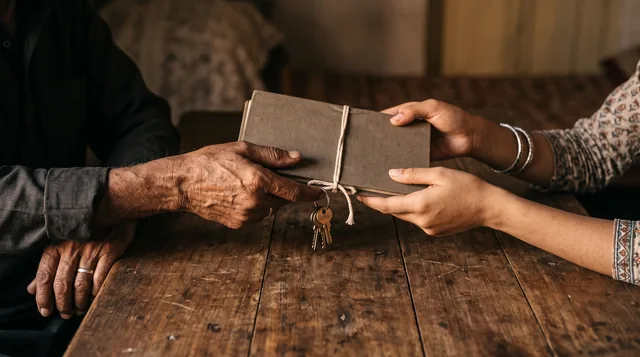 Papers & law8 min read
एक दिन — और ज़िंदगी भर का काग़ज़।
Papers & law8 min read
एक दिन — और ज़िंदगी भर का काग़ज़।
Registry day: what happens, and mutation afterwards
Stamp duty, the four-month clock, Aadhaar at the counter, e-registration from home, and why a registered deed still leaves mutation to be done.
8 Sep 2025 Papers & law8 min read
नाम किसके?
Papers & law8 min read
नाम किसके?
Whose name goes on the sale deed
Who paid and whose name is on the deed are two different questions. What the choice changes, and why to settle it at home, weeks early, not at the desk.
8 Sep 2025 Papers & law7 min read
रजिस्टर्ड है — पर किसका?
Papers & law7 min read
रजिस्टर्ड है — पर किसका?
What RERA does, and what it does not
Who must register with MP RERA, what an agent's number means, and the four checks a registration does not replace: title, ownership, coverage and sanction.
8 Sep 2025Tagged sale-deed, registry, instagram-series, checklist.
Read it. Then check it on the map.
Every colony's boundary, its approved layout, its zoning and its paperwork — on one screen. Signing in is free.