
सुना है
Six things everyone in Indore says about land that are not true
Registry done, RERA number, notary, boundary wall, divert later, the neighbour built — six shortcuts told in good faith, and where the record actually sits for each.

On this page
Six sentences get repeated about land in Indore: registry done, so all is well; a RERA number, so it is approved; notary done; the wall is up, so possession is settled; divert it later; the neighbour built, so we can too. Each swaps something visible for something recorded. Here is what the record says.
Nobody made these up to cheat you
Each of the six is a sensible shortcut that used to be roughly true, or sounds as if it must be, passed on by somebody who believed it. That is why they survive — and why each has cost a buyer in this city real money.
नीयत ख़राब नहीं थी — जानकारी अधूरी थी।
Neeyat kharaab nahin thi — jaankari adhoori thi.
1. "रजिस्ट्री हो गई, तो सब ठीक है"
Why it sticks. Registry day is the one everybody remembers — the money moves, the deed is stamped, the file closes — so it gets mistaken for the end of the checking.
What is actually the case. Registration records that a sale happened; it does not certify that the seller had anything to sell. The Supreme Court said so plainly in April 2025: a registering officer has no power to decide whether the person executing a deed holds any title. Meet the formalities, pay the stamp duty, and the deed is registered — even where the seller owned nothing. The chain of ownership is still yours to read.
2. "RERA नंबर है, तो सब अप्रूव्ड है"
Why it sticks. A registration number reads like a seal, and it is printed on the brochure exactly where a seal would sit.
What is actually the case. A RERA registration is a place on a public register: the promoter files authenticated copies of the approvals he already holds, and the regulator publishes them and holds him to them. The sanction itself comes from somebody else — the municipal corporation, the nagar palika or the planning authority. Read the sanction the number discloses, not only the number.
3. "नोटरी करा लिया, काम हो गया"
Why it sticks. It is quick, nearly free, and what comes back carries a stamp, a signature and a register number.
What is actually the case. A notary attests that these people signed this paper: authentication of execution and identity, not registration. Title in land passes only by a registered deed, and a document the law required to be registered has, unregistered, no effect on the property at all. The Supreme Court has held that "sales" done by agreement to sell, power of attorney and will convey no title.
Such a paper may still be evidence in a suit for specific performance — but that is a case to fight, not a property you own, and its worth is a question for a lawyer.
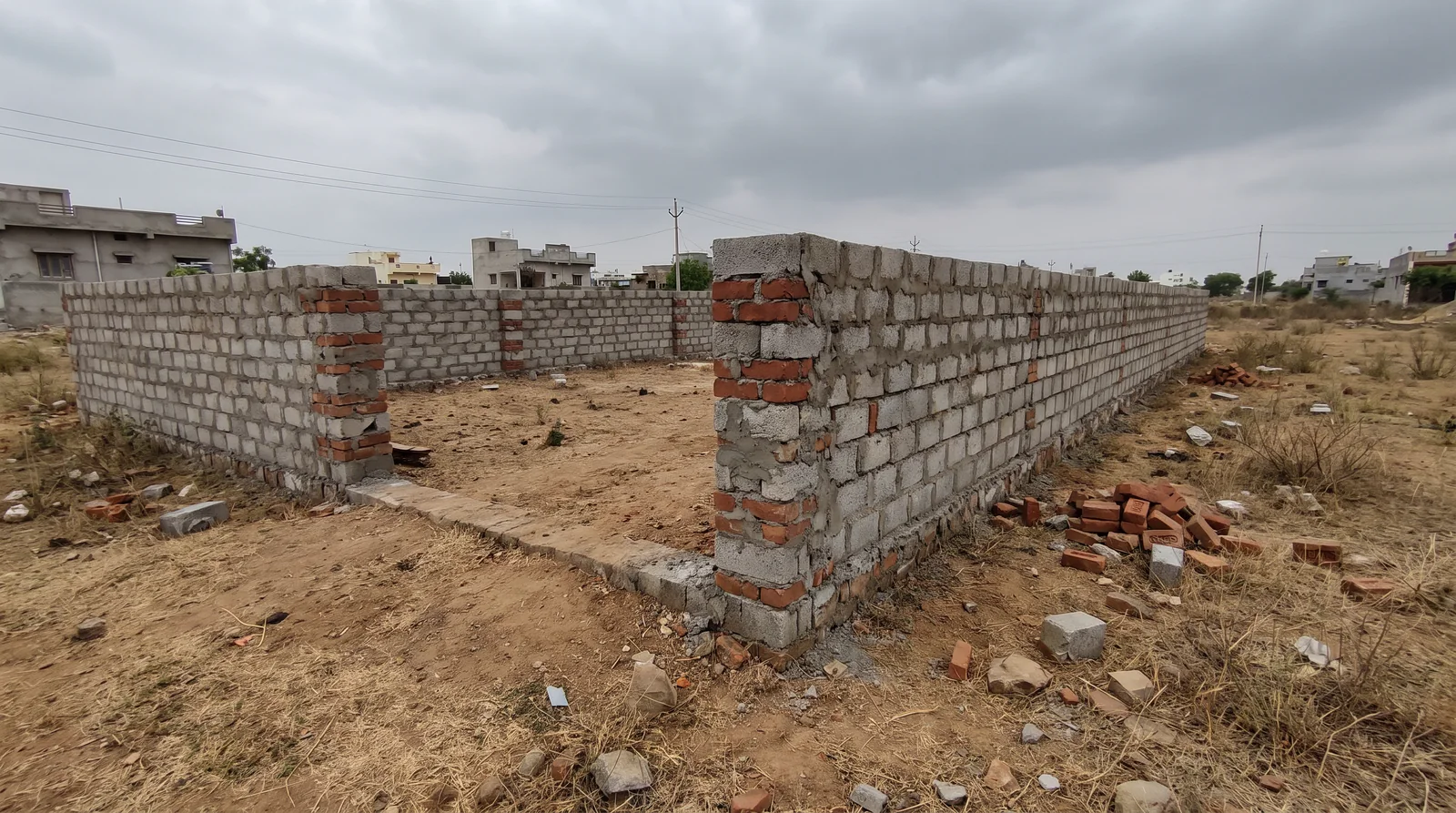
4. "बाउंड्री वॉल बन गई, तो कब्ज़ा हो गया"
Why it sticks. A wall is the most visible thing anyone can do to a piece of land, and it looks as if the argument is over.
What is actually the case. The boundary that decides is the demarcated one, not the built one. In Madhya Pradesh you can apply to the Tahsildar for demarcation; a revenue inspector, nagar sarvekshak or patwari notifies the neighbours, sets the boundary marks and files a report — which also records who is in possession, if not the bhumiswami. Where the wall and the map disagree, get the demarcation done before money moves. Who then has to shift is for a lawyer to say.
5. "खेती की ज़मीन है, बाद में डायवर्ट करा लेंगे"
Why it sticks. Because it did get easier: since 2018 you compute the premium and the reassessed land revenue yourself, deposit them and inform the Sub-Divisional Officer, which sounds like a formality that can wait.
What is actually the case. Easier is not automatic, and later is not free. The land is treated as diverted only from the date of that written intimation; miss it and the SDO can add a penalty of fifty per cent of the amount payable. And the Code allows diversion only to a purpose the land-use law already permits — you cannot self-declare your way past the development plan, where changing the use on the land-use map needs written permission. Diversion follows the plan; it never overrides it.
6. "पड़ोसी ने बना लिया, तो हम भी बना लेंगे"
Why it sticks. The street is the evidence you can see: four houses stand and nobody has come to knock them down.
What is actually the case. Building permission is granted plot by plot — by the municipal corporation, nagar palika or nagar panchayat, on the plan you submit. A house standing next door is not proof it was ever sanctioned: an unauthorised colony can be directed to stop work and served a fifteen-day show-cause notice long after the first roof went on. The neighbour's house permits nothing on your plot.
What all six share
A stamp pressed in front of you, a number on a website, a wall under your hand, a roof across the road — all real, and none of them the record. Each belief takes something visible and treats it as proof of something only ever established in a file.
जो दिख जाता है, ज़रूरी नहीं कि दर्ज हो।
Jo dikh jaata hai, zaroori nahin ki darj ho.
The answers sit in six different files, and the useful habit is one question: where is this written? On this platform each colony has one page holding its registration status, sanctioned layout, master-plan zone, khasra and paperwork — 1,161 colonies and projects and 13,352 documents as of September 2026 — so a sentence you heard can be set against a record you can see. This is general information about where records sit, not legal advice; for a particular plot, take the papers to a lawyer.
See it for yourself on the map — boundaries, plans and paperwork on one screen.
Check what is recorded for the colony, not what you were told →Questions people ask
Does registry mean the property is legally mine?
Registration records that the sale took place. The Supreme Court held in 2025 that the registering officer cannot decide whether the seller had title, so the chain of earlier deeds still has to be checked.
Is a notarised sale agreement valid for land?
A notary attests signatures. Title in land passes only by a registered deed; an unregistered agreement, power of attorney or will does not convey ownership, though it may be evidence in a suit.
Can agricultural land be diverted later in Madhya Pradesh?
Since 2018 you self-compute the premium and intimate the SDO in writing, but the land counts as diverted only from that date, and only to a use the development plan already permits.
If my neighbour built without permission, can I?
No. Building permission is granted per plot on your own plan, and an unauthorised colony can be told to stop work and served notice years after houses have gone up.
Where the facts come from. The facts and figures in this post come from verified government sources and verified RERA-registered brokers.
Indori Zameen is a private platform. It is not a government body and is not affiliated with one — always confirm a record with the concerned authority before you commit money.
Share this post
Related posts
 Papers & law7 min read
रजिस्टर्ड है — पर किसका?
Papers & law7 min read
रजिस्टर्ड है — पर किसका?
What RERA does, and what it does not
Who must register with MP RERA, what an agent's number means, and the four checks a registration does not replace: title, ownership, coverage and sanction.
8 Sep 2025 Papers & law8 min read
एक दिन — और ज़िंदगी भर का काग़ज़।
Papers & law8 min read
एक दिन — और ज़िंदगी भर का काग़ज़।
Registry day: what happens, and mutation afterwards
Stamp duty, the four-month clock, Aadhaar at the counter, e-registration from home, and why a registered deed still leaves mutation to be done.
8 Sep 2025 Papers & law9 min read
खेत से प्लॉट तक
Papers & law9 min read
खेत से प्लॉट तक
Farmland to plots: what diversion changes, and what it does not
Diversion only changes what a parcel is assessed for on the revenue record. The two permissions that must follow, and which paper to ask for by date.
8 Sep 2025 Papers & law8 min read
सरहद का झगड़ा।
Papers & law8 min read
सरहद का झगड़ा।
How boundary disputes start, and the cheap half of avoiding them
Boundary disputes begin as a few feet nobody measured. The six ways a line goes wrong, and the five cheap things to do before you build.
8 Sep 2025Tagged myths, instagram-series, registry, rera, diversion.
Read it. Then check it on the map.
Every colony's boundary, its approved layout, its zoning and its paperwork — on one screen. Signing in is free.