
नाप-तौल
Plot sizes and units: square feet, square metres, bigha and hectare
One conversion to memorise, two tables to keep, and why a bigha is a custom rather than a measurement.
On this page
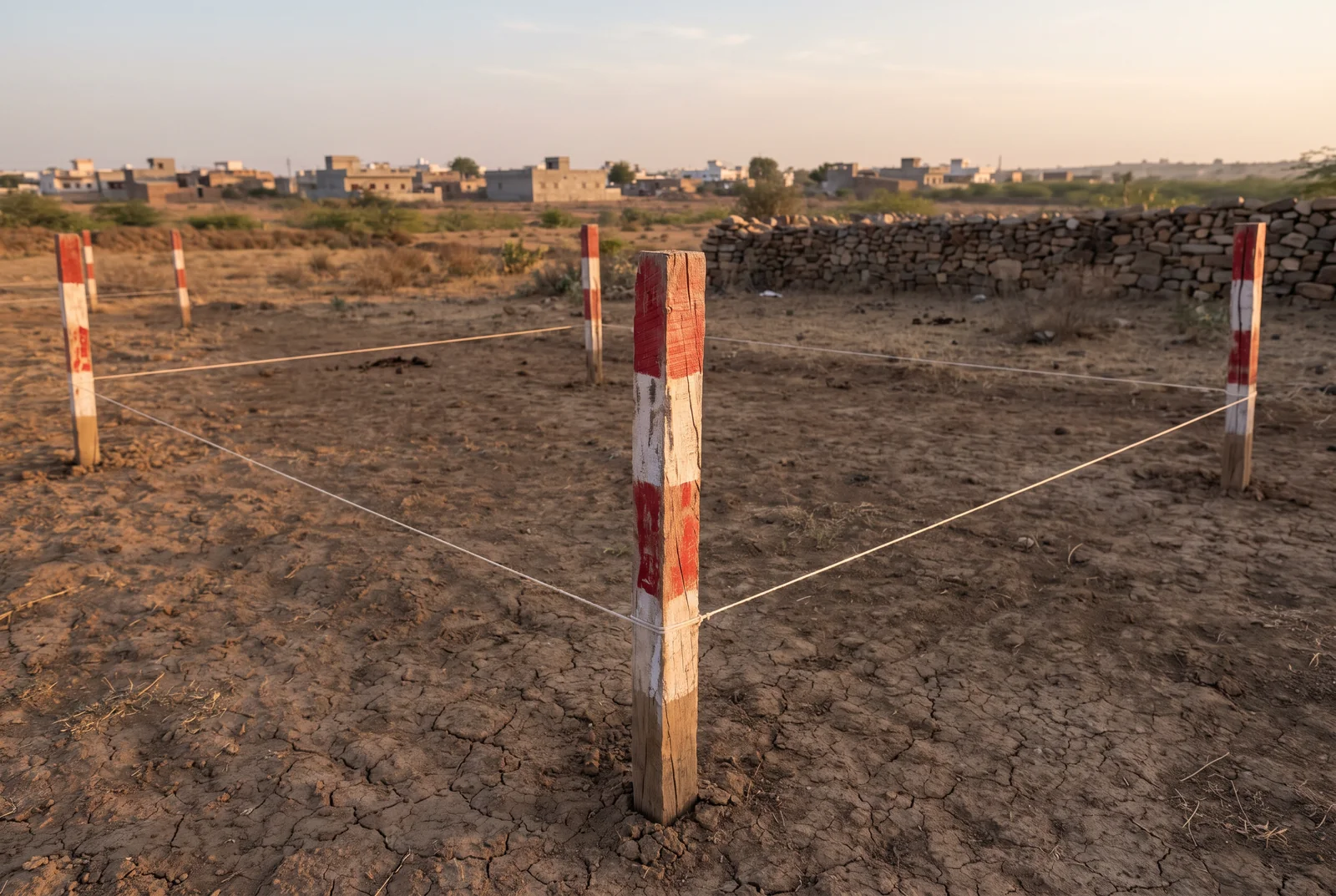
One plot, four numbers: 1,500 square feet from the agent, 139.4 square metres on the sanctioned drawing, 166.7 gaj from the neighbour, and "one bigha" from the farmer next door. The first three are the same area in three vocabularies; the fourth is not a fixed size at all. Convert everything to square metres before you compare anything.
The everyday problem
Sizes are the one part of a land deal everybody believes they already understand, which is why they cause so much confusion. The agent on the phone thinks in square feet. The sanctioned layout is drawn in metres. An older neighbour counts in gaj, which is a square yard. The revenue record keeps the whole parcel in hectares. And somewhere in the conversation a bigha appears, which is a word whose value depends on which district you happen to be standing in. Nothing here is dishonest. It is simply four languages for one piece of ground, and the first job is to pick one.
गज, फ़ीट, मीटर — पहले भाषा एक कीजिए।
Gaj, feet, metre — pehle bhaasha ek kijiye.
The one number worth memorising
One square metre is 10.764 square feet, and one square foot is 0.0929 square metre. This is not a market convention that drifts. A foot has been defined as exactly 0.3048 metre since 1959, so a square foot is exactly 0.09290304 square metre, and it has not moved since.
In your head, both ways:
- Square feet to square metres: knock off a zero, then take away seven per cent. 1,500 becomes 150, then about 139.
- Square metres to square feet: add a zero, then add eight per cent. 139 becomes 1,390, then about 1,500.
Every unit you will be quoted
| Unit | Square feet | Square metres |
|---|---|---|
| 1 square foot | 1 | 0.0929 |
| 1 square yard (gaj) | 9 | 0.836 |
| 1 square metre | 10.764 | 1 |
| 1 are (aar) | 1,076.4 | 100 |
| 1 acre | 43,560 | 4,046.86 |
| 1 hectare | 107,639 | 10,000 |
| 1 bigha | not a fixed size — see below | — |
A hectare is 100 are, and an are is 100 square metres, which is why revenue land comes in figures like 0.405 hectare — that is one acre. Going the other way, one hectare is 2.471 acres.
A bigha is a custom, not a standard
There is no all-India bigha. Its value is set by local usage, and the usage changes from state to state and, inside a state, from district to district. The figures commonly reported:
| Where | One bigha, commonly reported |
|---|---|
| Uttarakhand | 6,806 sq ft |
| Himachal Pradesh | 8,712 sq ft |
| West Bengal and Assam | 14,400 sq ft |
| Rajasthan, kaccha bigha | 17,424 sq ft |
| Rajasthan, pucca bigha | 27,225 sq ft |
Same word, four times the land — and Rajasthan does not even keep to one value, running a kaccha and a pucca bigha side by side.
"So how much is one bigha here?"
It is the question buyers ask most, and it is incomplete. Anyone who answers it with one confident number is describing their own habit, not the land. A bigha here means whatever the two people talking have agreed it means — and nothing in the record can settle the argument, because Madhya Pradesh keeps a parcel's area in hectares.
30 by 50 is a shape; here is the size
Plots are sold by their sides in feet, and the sides are a shape, not an area. The table below is what those shapes actually come to.
| In feet | Sq ft | Sq m | Gaj |
|---|---|---|---|
| 20 × 40 | 800 | 74.3 | 88.9 |
| 30 × 40 | 1,200 | 111.5 | 133.3 |
| 30 × 50 | 1,500 | 139.4 | 166.7 |
| 40 × 60 | 2,400 | 223.0 | 266.7 |
| 50 × 80 | 4,000 | 371.6 | 444.4 |
| 60 × 90 | 5,400 | 501.7 | 600.0 |
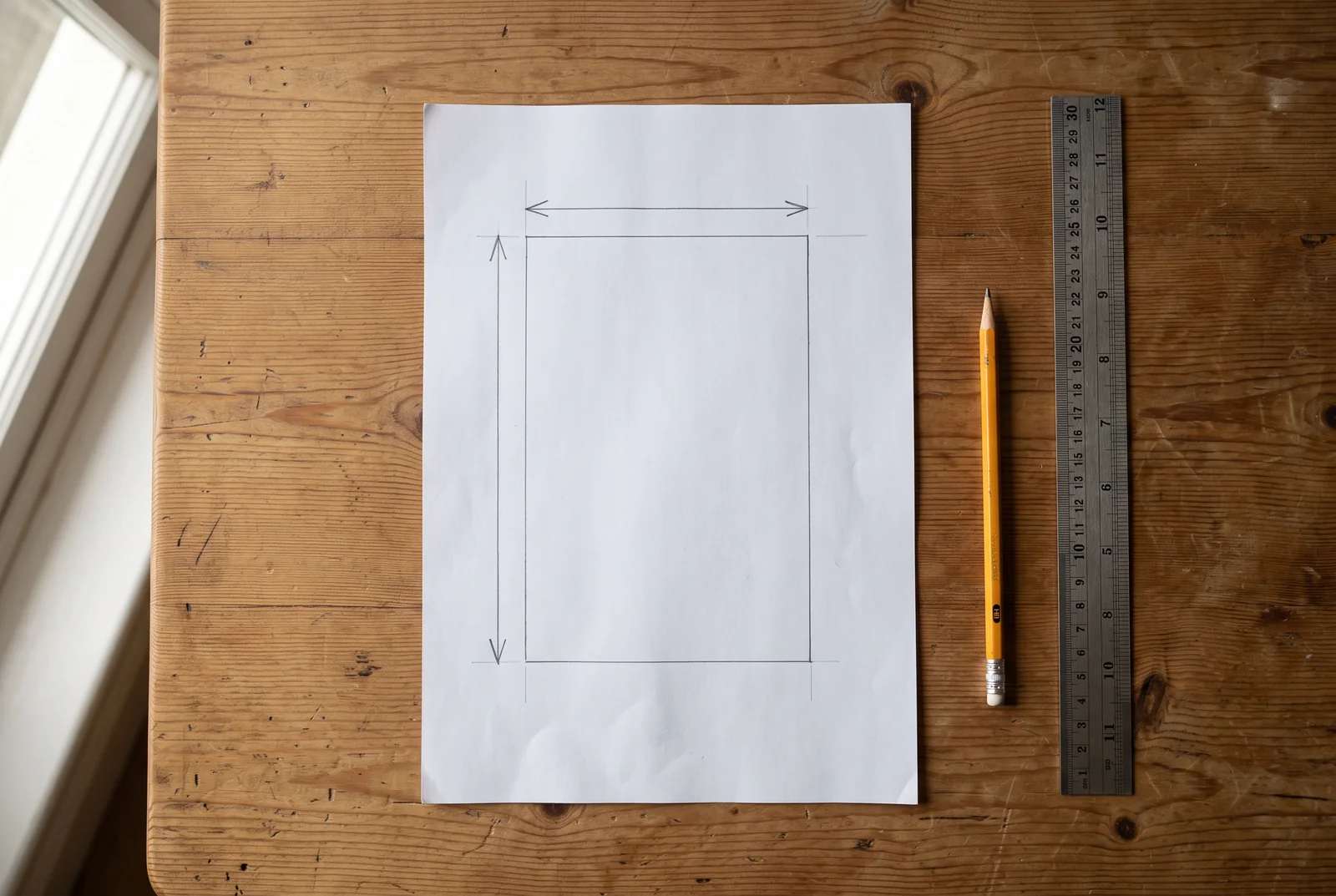
Do the multiplication yourself, every time. Length times breadth has to equal the area you were quoted; when it does not, one of the two numbers is doing work it should not be doing.
One figure in this range is worth knowing in metres. Madhya Pradesh's building rules give residential plots up to 186 square metres — about 2,002 square feet — a deemed building permission. That line falls between a 30 × 50 and a 40 × 60, and it is written in metres, not feet, which is one more reason to think in the unit the rules use.
The big units: acre and hectare
One acre is 43,560 square feet, which is about twenty-nine plots of 30 × 50 — on paper. On the ground it is always fewer, because the roads, the garden and the open space come out of the same acre before a single plot is drawn. One hectare is 2.471 acres, 107,639 square feet, or 10,000 square metres.
The number that governs is on the sanctioned drawing
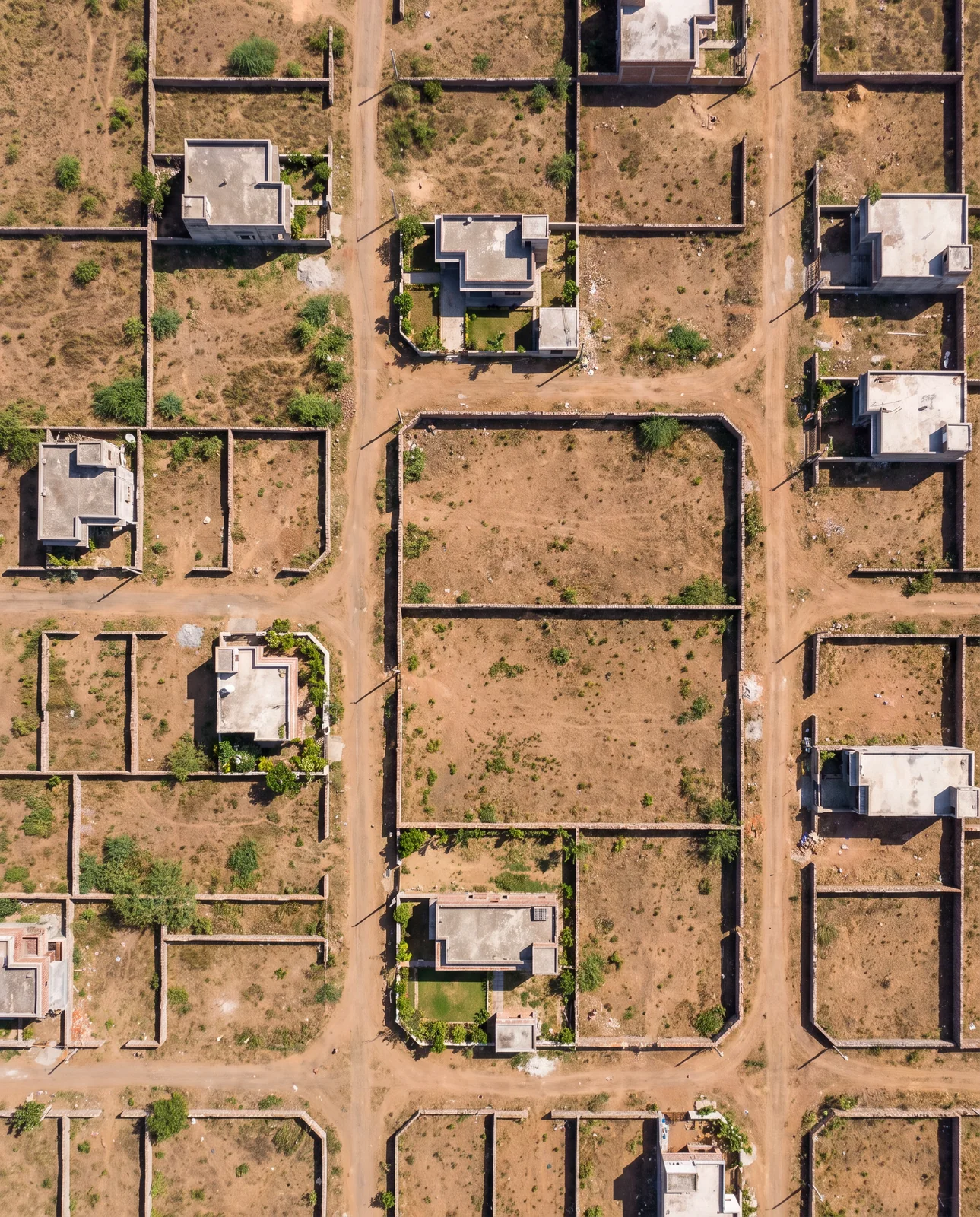
An advertisement can quote whatever unit sells best. The sanctioned layout carries each plot's dimensions in metres, and the revenue record carries the parcel in hectares. When either disagrees with a hoarding, the hoarding is not the document that was approved.
Before you compare two plots: four moves
- Convert everything to square metres — the unit the drawing and the record already use.
- Multiply the dimensions yourself and check they give the area you were quoted.
- Ask what the area covers: the plot as drawn on the sanctioned layout, or something with a share of common land folded in.
- If a bigha appears anywhere, get its square feet in writing before going further.
Worked in one line: Plot A is 30 × 50 feet, which is 1,500 square feet, which is 139.4 square metres. Plot B is 12.5 metres by 11 metres, which is 137.5 square metres. Only now can you see that B is the smaller plot. Neither quote said so on its own.
नाप बराबर हो, तभी मोल-भाव बराबर होता है।
Naap baraabar ho, tabhi mol-bhaav baraabar hota hai.
See it for yourself on the map — boundaries, plans and paperwork on one screen.
Read each plot's dimensions off the sanctioned layout →Questions people ask
How many square feet in one square metre?
10.764. One square foot is 0.0929 square metre. Both follow from the foot being exactly 0.3048 metre.
How many square feet is one bigha in Madhya Pradesh?
There is no fixed answer. Bigha is a customary unit whose value changes by state and district, and Madhya Pradesh's land record keeps area in hectares. Ask the person quoting it how many square feet their bigha is, and get it in writing.
How many square feet is a 30 by 50 plot?
1,500 square feet, which is 139.4 square metres or 166.7 gaj.
What is one gaj in square feet?
A gaj is a square yard: 9 square feet, or 0.836 square metre.
How many plots in one acre?
An acre is 43,560 square feet, about twenty-nine plots of 30 by 50 on paper. After roads and open space it is always fewer.
Which unit is used on a sanctioned layout plan in Madhya Pradesh?
Metres. Each plot's dimensions are drawn in metres, and the revenue record states the parcel in hectares.
Where the facts come from. The facts and figures in this post come from verified government sources and verified RERA-registered brokers.
Indori Zameen is a private platform. It is not a government body and is not affiliated with one — always confirm a record with the concerned authority before you commit money.
Share this post
Related posts
 Maps & plans8 min read
नक्शा पढ़ना सीखिए।
Maps & plans8 min read
नक्शा पढ़ना सीखिए।
How to read a sanctioned layout plan
Plot numbers, road widths, open space, the reserved series and boundary lengths: how to read each one off a sanctioned layout plan before you pay.
8 Sep 2025 Papers & law8 min read
काग़ज़ों के शब्द
Papers & law8 min read
काग़ज़ों के शब्द
Seven words on your papers: khasra, khatauni, diversion, FAR, mutation and more
Khasra, khatauni, diversion, layout sanction, guideline rate, FAR and setback, mutation: what each word on your plot's papers means, and why it matters.
8 Sep 2025 Money7 min read
सौदा बनाम ख़र्च
Money7 min read
सौदा बनाम ख़र्च
The price is not the cost: stamp duty, guideline rate and the real total
On a ₹50 lakh plot you pay ₹55.25 lakh before a brick is laid. How stamp duty and the guideline rate work in Madhya Pradesh, and the four costs that come after.
8 Sep 2025 Papers & law8 min read
सरहद का झगड़ा।
Papers & law8 min read
सरहद का झगड़ा।
How boundary disputes start, and the cheap half of avoiding them
Boundary disputes begin as a few feet nobody measured. The six ways a line goes wrong, and the five cheap things to do before you build.
8 Sep 2025Tagged glossary, plot, instagram-series, layout-plan, khasra.
Read it. Then check it on the map.
Every colony's boundary, its approved layout, its zoning and its paperwork — on one screen. Signing in is free.