
दो रास्ते, एक फ़ैसला
Plot or flat: two products, two checklists
Decide between a plot and a flat on what each one asks of you, then run the checklist that belongs to the one you chose.
On this page
Neither is the right answer. A plot is land you buy and then build on, with every decision after the purchase still yours. A flat is a finished home you move into, with most decisions already made by somebody else. Choose on what each asks of you, then check the record that belongs to the one you chose.
The question is not price
Families in Indore argue about this as if it were a question of cost per square foot. It is not. The two are different products that happen to solve the same need, and the money is only one of the ways they differ.
A plot is a decision you keep making: the design, the sanction, the contractor, the material, the stages and the timeline, for years. A flat is a decision you make once. Somebody else has already made the rest, and you are buying the result.
सवाल सस्ते-महँगे का नहीं है। सवाल ये है कि आप ख़रीद क्या रहे हैं।
Sawaal saste-mehenge ka nahin hai. Sawaal ye hai ki aap khareed kya rahe hain.
Put simply, a plot asks you for time. A flat asks you for trust, in a builder, a society and a shared title. They suit different families, different timelines and different appetites for work, and when they go wrong they go wrong in completely different ways.
Option A: the plot
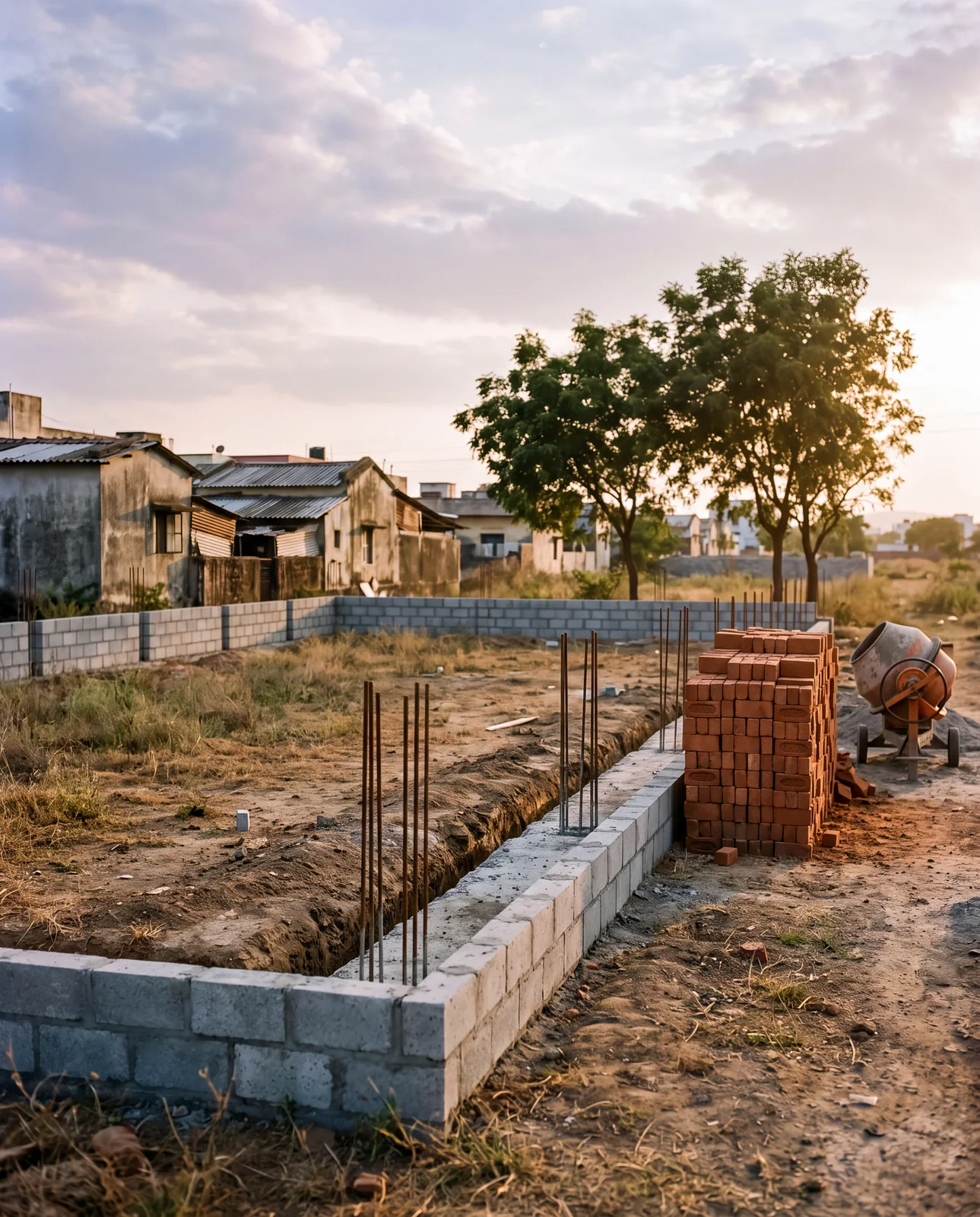
You buy the land. Then you build everything else on it, and the wait before anyone can live there is yours too.
What you control
- How many rooms, how many floors, and which way the house faces.
- When you build, and whether you do it in one go or in stages as money allows.
- What you spend on now and what you leave for later.
- The land itself, which does not wear out the way a building does.
What you carry
- Building permission, and every approval that follows it.
- Contractors, material, supervision and the delays that come with all three.
- Guarding an empty piece of land until something stands on it.
- The years between paying for the plot and living on it.
Freedom comes attached to work. That is the whole trade, and a family that enjoys the work will be happy on a plot; a family that wants to be done will not.
Option B: the flat
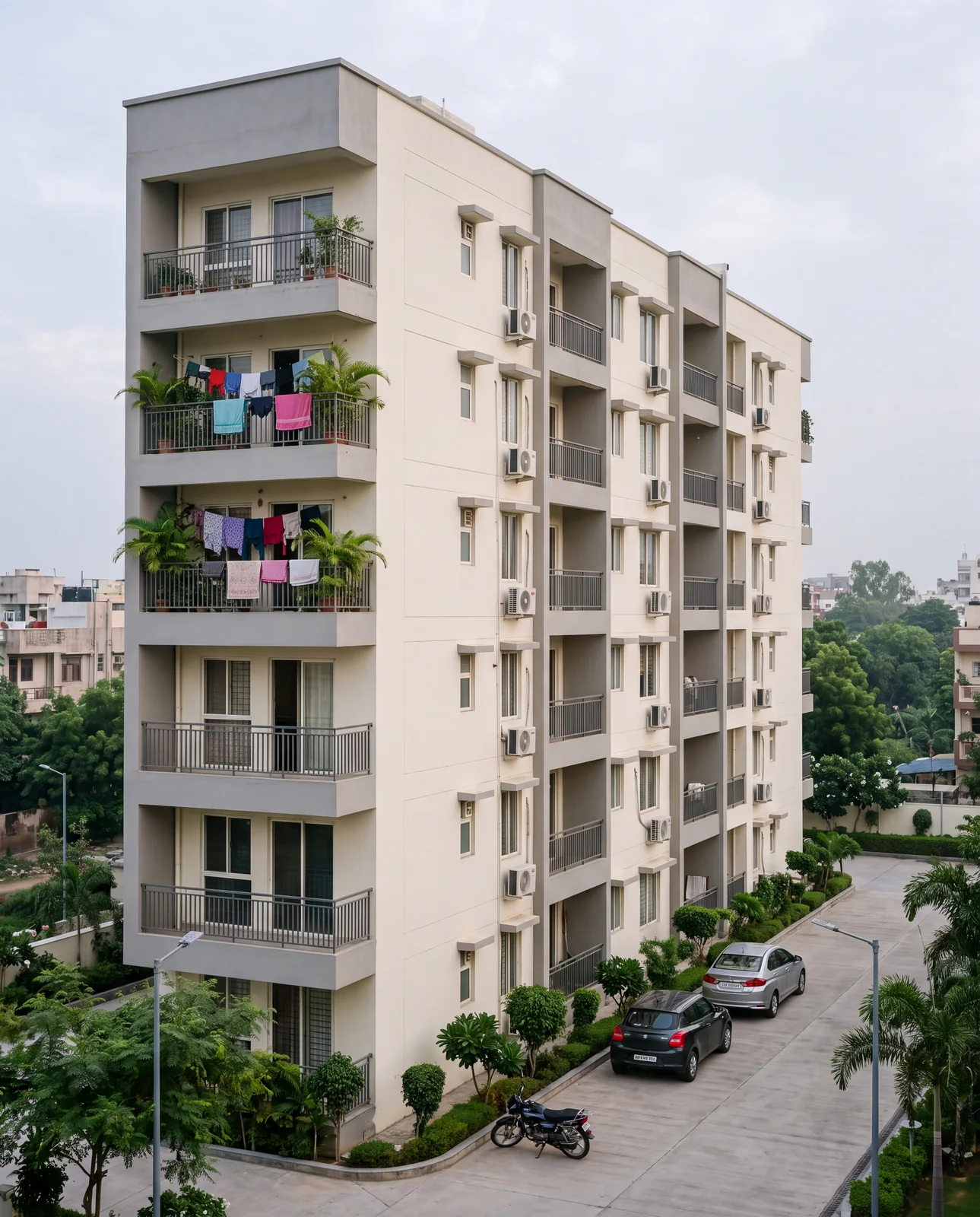
You buy the finished thing, or nearly finished. Someone else built it, and someone else will maintain the parts you share.
What you get
- A home you can stand inside before you pay for it.
- Lending against a completed home is usually simpler than lending against bare land.
- Lift, water, security and upkeep shared with everyone in the building.
- Nothing to build, supervise or guard.
What you depend on
- The builder finishing, and handing over properly on paper.
- The society collecting maintenance and spending it well.
- An undivided share of the land underneath, not a demarcated piece with a boundary of its own.
- The structure allowing whatever changes you later want to make to your own flat.
Convenience comes attached to other people. Where the plot owner's risk is his own delay, the flat owner's risk is somebody else's.
Checklist 1: if you are buying a plot, check the land
The five questions below are about the ground and its record. Each one has a longer guide of its own; this is the short form.
- Is the colony registered? A plot map drawn by a seller is not a register entry. The two are different documents, and only one of them puts the colony on the public record.
- Is there a sanctioned layout, and does the ground match it? Roads, open space and plot numbers as the planning authority approved them, not as the seller has drawn them.
- Has the land been diverted for residential use? Agricultural land is not a housing plot until the revenue record says so.
- Does the khasra on the paper match the land you were shown? This is the commonest gap between a site visit and a file.
- What does the master plan zone allow here? And whether a proposed road runs through the plot you are about to buy.
Checklist 2: if you are buying a flat, check the project
Here the questions are about the building and the people behind it.
- Is the project registered with RERA? And does that registration cover the tower and the phase you are buying in, not just the first phase that was launched.
- Is there an approved building plan, and is the tower built to it? Floors, setbacks and use, as sanctioned.
- Completion and occupancy: issued, or still awaited? People living in a building is not the same as the building having been cleared.
- Who holds the land, and who runs the society? Your undivided share, the common areas, and who collects the maintenance.
- What is the carpet area in the agreement? Ask for it in writing, separately from any other area quoted to you.
Side by side
| Plot | Flat | |
|---|---|---|
| What you own | A demarcated piece of land | A unit, plus an undivided share of the land |
| What you decide | Design, timing, spend, stages | Which unit to buy |
| What you carry | Approvals, building, guarding, years | Trust in the builder and the society |
| Ready to live in | Only after you build | At handover |
| Finance | Usually harder against bare land | Usually simpler against a completed home |
| The first check | Colony registration and sanctioned layout | RERA registration and the building plan |
Either way, start by reading the record
The decision can wait a week. The reading cannot, because it is the reading that tells you whether the thing you are arguing about is what the seller says it is. A colony's public record shows its registered status, its sanctioned layout, its master-plan zone and the documents on file. Open that first, then have the family argument with the facts on the table.
फ़ैसला बाद में — पहले काग़ज़ पढ़िए।
Faisla baad mein — pehle kaaghaz padhiye.
See it for yourself on the map — boundaries, plans and paperwork on one screen.
Open the colony's record: registration, sanctioned layout, zone and documents →Questions people ask
Is it better to buy a plot or a flat in Indore?
It depends on what you want to carry. A plot gives you control and years of work; a flat gives you a finished home and dependence on a builder and a society. Decide on that, not on the rate per square foot.
Does a flat owner own the land?
An undivided share of it, shared with every other owner in the building. It is not a demarcated piece with its own boundary.
Do plots need RERA registration?
A plotted project can fall inside the Act, depending on its size. Check the MP RERA portal for the project, and check separately that the colony is registered and has a sanctioned layout.
What is carpet area and why does it matter?
The usable floor area inside the walls of the flat, as the Act defines it. It is the figure to compare between projects, because built-up and super built-up numbers include space you do not occupy.
What should I check before buying a plot in a colony?
Whether the colony is registered, whether a sanctioned layout exists and the ground matches it, whether the land is diverted for residential use, whether the khasra matches the plot shown, and what the master plan zones it as.
Where the facts come from. The facts and figures in this post come from verified government sources and verified RERA-registered brokers.
Indori Zameen is a private platform. It is not a government body and is not affiliated with one — always confirm a record with the concerned authority before you commit money.
Share this post
Related posts
 Papers & law7 min read
रजिस्टर्ड है — पर किसका?
Papers & law7 min read
रजिस्टर्ड है — पर किसका?
What RERA does, and what it does not
Who must register with MP RERA, what an agent's number means, and the four checks a registration does not replace: title, ownership, coverage and sanction.
8 Sep 2025 Buying guides7 min read
ज़मीन ख़रीदने से पहले
Buying guides7 min read
ज़मीन ख़रीदने से पहले
Five checks before you buy land in Indore, each with its red flag
Five two-minute checks on any plot in Indore — registration, khasra, zone, proposed roads, sanctioned plan — and the red flag hiding inside each one.
8 Sep 2025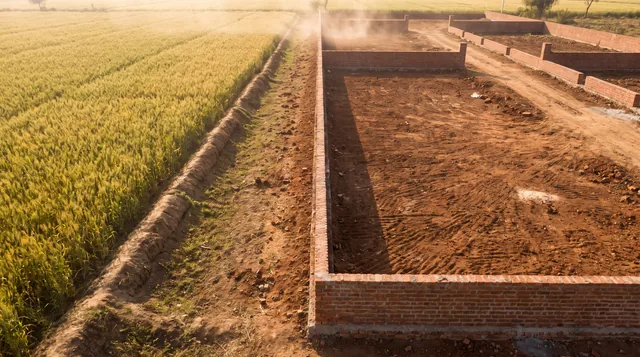 Papers & law9 min read
खेत से प्लॉट तक
Papers & law9 min read
खेत से प्लॉट तक
Farmland to plots: what diversion changes, and what it does not
Diversion only changes what a parcel is assessed for on the revenue record. The two permissions that must follow, and which paper to ask for by date.
8 Sep 2025 Buying guides9 min read
दो सौदे, एक ज़मीन
Buying guides9 min read
दो सौदे, एक ज़मीन
Buying from a developer vs an individual owner
A developer sells you a project and a promise; an owner sells you one parcel and its paper trail. The questions for each, and the three that never change.
8 Sep 2025Tagged plot, flat, checklist, instagram-series, rera, layout-plan.
Read it. Then check it on the map.
Every colony's boundary, its approved layout, its zoning and its paperwork — on one screen. Signing in is free.