
शुरू से क़ब्ज़े तक
From first search to possession: the nine stages and how long each takes
Put the nine stages of a plot purchase in the right order, so the token is the fifth thing you do and not the first.
On this page
- The order is the whole argument
- The nine stages at a glance
- Stages 1 and 2: before you leave the house
- Stage 3: go twice
- Stage 4: negotiate with both numbers in hand
- Stage 5: the token, fifth and not first
- Stages 6 and 7: after the token, before the deed
- Stages 8 and 9: the purchase is not over when you sign
- Do the cheap stages first
A plot purchase has nine stages: decide, shortlist on the record, walk the ground, negotiate, pay a token, run the title search, register the deed, mutate the record, take possession. The token is fifth. Most first-time buyers make it first, and every question they ask afterwards is asked with their money already on the table.
The order is the whole argument
Nobody lays out the full sequence of buying land, so people do the right things in the wrong order. The usual version runs: see a plot, pay a token, then start asking questions, find something, and argue about it or swallow it. The better version runs: decide what and where, check the record, walk the ground, negotiate, and only then pay a token.
The tasks are the same in both lists. Only the order changes. And everything in the first list costs money to undo, while everything in the second costs an evening.
टोकन देने के बाद सवाल, सवाल नहीं रहता।
Token dene ke baad sawaal, sawaal nahin rehta.
The nine stages at a glance
| Stage | What happens | How long it tends to hold you |
|---|---|---|
| 1. Decide | What you are buying, and where | An evening |
| 2. Shortlist on the record | Colony, layout, zone, papers | A few evenings, from home |
| 3. Walk the ground, twice | Different day, different hour | Two trips, weeks apart |
| 4. Negotiate | Knowing both numbers first | Days to weeks |
| 5. Token and agreement to sell | The first irreversible step | One sitting, and it binds |
| 6. Title search and the lender | Your checks, and the bank's | Usually the longest wait |
| 7. Stamp duty and the deed | Registry day | A single day |
| 8. Mutation | Your name onto the revenue record | Not the same day |
| 9. Possession, wall, connections | The plot becomes yours in fact | Months, after the deed |
The durations are relative, not promises. Every plot, every seller, every lender and every office runs on its own clock, which is exactly why the order matters more than the calendar.
Stages 1 and 2: before you leave the house
Two of the nine stages happen sitting down, and they cost nothing.
Stage 1: decide what you are buying, and where
Plot or built. To live on, or to hold. Which side of the city, and how far out you are willing to go. Settle these and the search stops being an endless scroll through listings and becomes a short list of colonies worth looking at.
Stage 2: shortlist on the record
Four things can be answered from home, before anyone is telephoned: where the colony's recorded boundary actually is, whether a sanctioned layout exists, what the master plan zones that land as, and what is actually on file for it. Twenty names become three before you have spent a single Sunday driving.
Stage 3: go twice

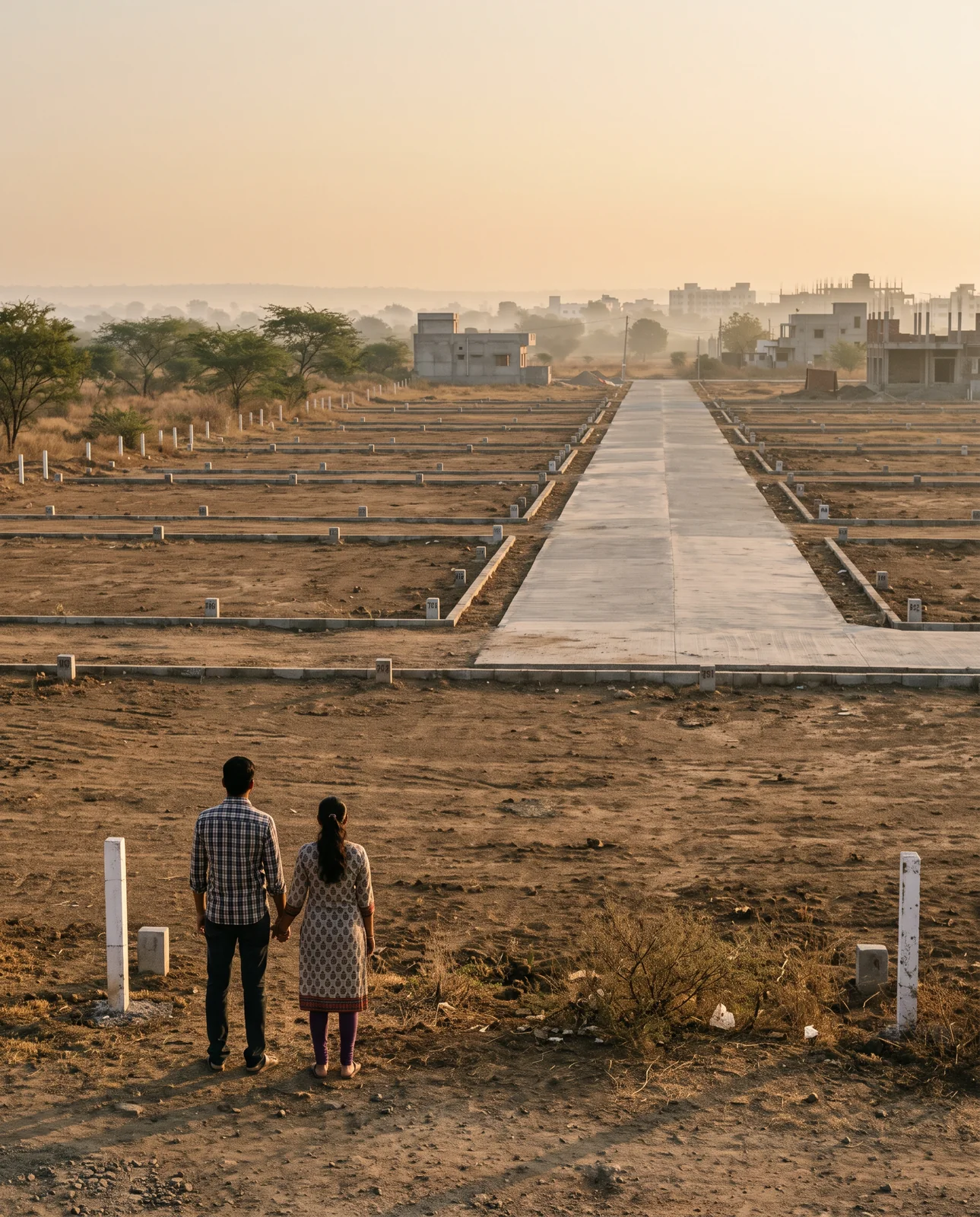
Visit once with the sanctioned layout in your hand, so you can put the drawing on the ground: the roads where the sheet says they are, the open space where it is meant to be, the plot number on the paper matching the plot under your feet.
Then visit again, unannounced, on a different day and at a different hour. A first visit shows you what a seller wants you to see. The second shows you the water after rain, the traffic on a weekday, the neighbours, and whether the road you were driven in on is the only one.
एक बार दिखाया जाता है। दूसरी बार दिखता है।
Ek baar dikhaya jaata hai. Doosri baar dikhta hai.
Stage 4: negotiate with both numbers in hand
You cannot argue about a number you do not know. Two numbers are knowable before you sit down.
The market number: what plots in that colony have actually changed hands for. Not what the main road outside is quoted at; the colony, the size, and the side of the street.
The government number: the guideline rate for that locality. It is published by the state, and it is the floor under what the state charges you in stamp duty and registration fee, whatever price the two of you agree.
Stage 5: the token, fifth and not first
This is the first thing you do that you cannot simply undo. Everything before it is reading, walking and asking. Everything after it, you do with your own money already committed.
A question asked before the token is a question. The same question after it is an argument, and you are the one with something to lose. That is the entire reason stages two, three and four come before it.
One protection is worth knowing. Where the plot sits inside a RERA-registered project, the promoter cannot take more than ten per cent of the cost as an advance or deposit without first entering into a written agreement for sale and registering it.
Stages 6 and 7: after the token, before the deed
Stage 6: the title search, and the lender's own
The chain of ownership is traced back, and the land is checked for anything charged against it. If there is a loan, the bank runs its own legal and valuation checks on the same plot, separately, on its own timetable. Taken together this is usually the longest single wait in the whole purchase, and it is the stage almost nobody budgets time for.
Which is one more reason the token comes fifth. A completion date agreed at the token, with no idea how long stage six will take, is a date you may end up paying to move.
Stage 7: stamp duty and the deed
One day at the Sub-Registrar's office, with the duty and the fee paid on the deed. Everything about that day is a guide of its own. Here it is simply stage seven of nine, and it is not the end.
Stages 8 and 9: the purchase is not over when you sign
Stage 8: mutation
The deed records the transfer between two people. Mutation, नामांतरण, is what puts your name into the record of the land itself. It does not happen on registry day, and it does not happen by itself. Do not assume it was done; go and look until your own name is on the record.
Stage 9: possession
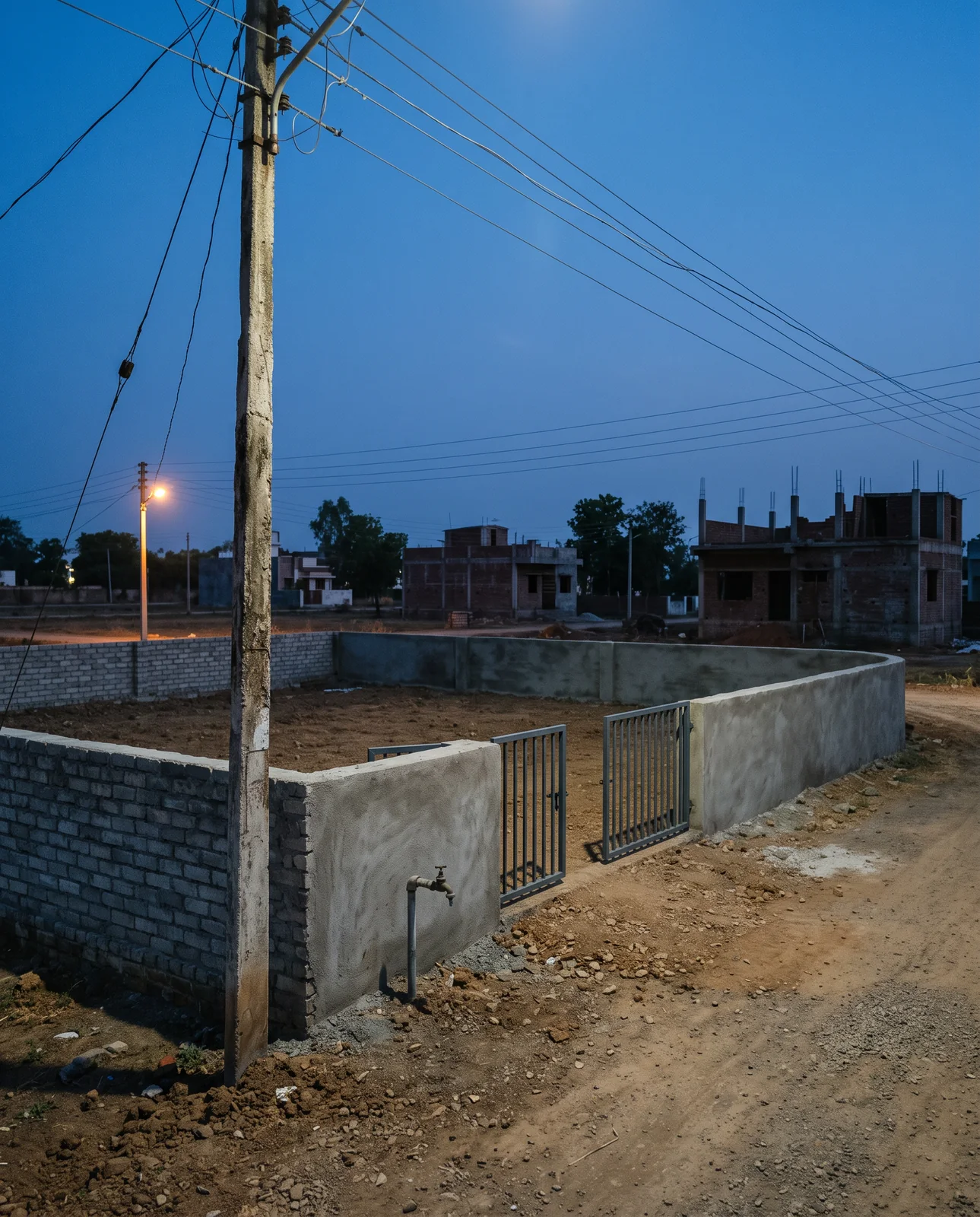
Take physical possession. Walk the four corners against the sanctioned layout before anything is built, and settle any difference then, while it is a conversation. Then the boundary wall, and the applications for power and water. The plot becomes yours in fact some months after it became yours on paper.
Do the cheap stages first
Stages two and three cost nothing but evenings and two drives. They are also the two most often skipped. Put them before the token, and the rest of the sequence stops being a gamble and becomes a procedure.
See it for yourself on the map — boundaries, plans and paperwork on one screen.
Do stage two here: boundary, sanctioned layout, zone and papers for every mapped colony →Questions people ask
How long does it take to buy a plot in Indore?
There is no fixed figure. Shortlisting and site visits take a few weeks; the title search and a lender's checks are usually the longest wait; registry is one day; mutation and possession follow over months. The order is more predictable than the calendar.
When should I pay token money for a plot?
After you have checked the colony's record, walked the ground twice and negotiated with the market rate and the guideline rate in hand. It is the first step you cannot undo, so it should come fifth, not first.
What happens after registry of a plot?
Two things: mutation, which puts your name on the revenue record, and physical possession, which means checking the corners against the sanctioned layout, building the boundary wall and applying for connections.
Can a builder take more than 10 percent as advance?
Not in a RERA-registered project. Under s. 13(1) of the Act the promoter cannot accept more than ten per cent of the cost without a written, registered agreement for sale.
What is the guideline rate and why does it matter when negotiating?
The state's published rate for a locality, used as the floor for stamp duty and registration fee. Knowing it, alongside what plots in the colony actually sell for, means the conversation is about the plot and not about whatever the seller says first.
Where the facts come from. The facts and figures in this post come from verified government sources and verified RERA-registered brokers.
Indori Zameen is a private platform. It is not a government body and is not affiliated with one — always confirm a record with the concerned authority before you commit money.
Share this post
Related posts
 Papers & law7 min read
टोकन देने से पहले
Papers & law7 min read
टोकन देने से पहले
The token: the agreement that comes before the sale deed
The token is the first money you pay and the moment you have least on paper. Six things to put in the agreement to sell before it moves.
8 Sep 2025 Buying guides8 min read
ज़मीन पर जाकर क्या देखें।
Buying guides8 min read
ज़मीन पर जाकर क्या देखें।
The plot site visit: what to check with your feet
Walk all four sides, pace the road, return at another hour, look down and up, ask the neighbours, photograph the markers with the date on. The site visit list.
8 Sep 2025 Papers & law8 min read
एक दिन — और ज़िंदगी भर का काग़ज़।
Papers & law8 min read
एक दिन — और ज़िंदगी भर का काग़ज़।
Registry day: what happens, and mutation afterwards
Stamp duty, the four-month clock, Aadhaar at the counter, e-registration from home, and why a registered deed still leaves mutation to be done.
8 Sep 2025 Money7 min read
सौदा बनाम ख़र्च
Money7 min read
सौदा बनाम ख़र्च
The price is not the cost: stamp duty, guideline rate and the real total
On a ₹50 lakh plot you pay ₹55.25 lakh before a brick is laid. How stamp duty and the guideline rate work in Madhya Pradesh, and the four costs that come after.
8 Sep 2025Tagged registry, how-to, instagram-series, checklist, site-visit, mutation.
Read it. Then check it on the map.
Every colony's boundary, its approved layout, its zoning and its paperwork — on one screen. Signing in is free.