
ज़मीन देख ली — बनाने वाले को देखा?
How to verify a developer in Indore
Judge the people who still have to build your roads by the colony they finished five years ago, the security the rules make them post, and what they filed with the regulator.

On this page
- Why the plot being clean is not the end of it
- The one thing to do: stand in a colony they finished
- The harder question: what is still unfinished
- Why the rulebook holds a security at all
- How a colony is meant to end
- Five minutes with somebody who lives there
- Two things that prove nothing
- It is already written down
Verify a developer by their finished work, not their site office. Spend an afternoon in a colony they completed five years ago, walk to its last row of plots, and ask the people living there three questions. Then check the sanction, the security the rules require them to post, and what they filed about their earlier projects with the regulator.
Why the plot being clean is not the end of it
Suppose the papers on the plot are in order. Good. A plot in a colony still comes with a list of things the developer owes the colony, and every item on it is a promise about the future: internal roads, drainage, the open space, water supply, electricity, sewerage. Those promises are made by a particular set of people with a particular history, and they fall due long after your registry is done.
That is why a clean plot from somebody who does not finish is still a problem. You are not only buying the land; you are buying what they still have to build on it.
प्लॉट साफ़ है। बाक़ी काम कौन पूरा करेगा?
Plot saaf hai. Baaki kaam kaun poora karega?
The one thing to do: stand in a colony they finished
Not the site office and not the render. Go and stand in a colony this developer completed five years ago. Whatever they are going to do to the land you are considering, they have already done somewhere else, and that place is the honest brochure. It costs one afternoon.
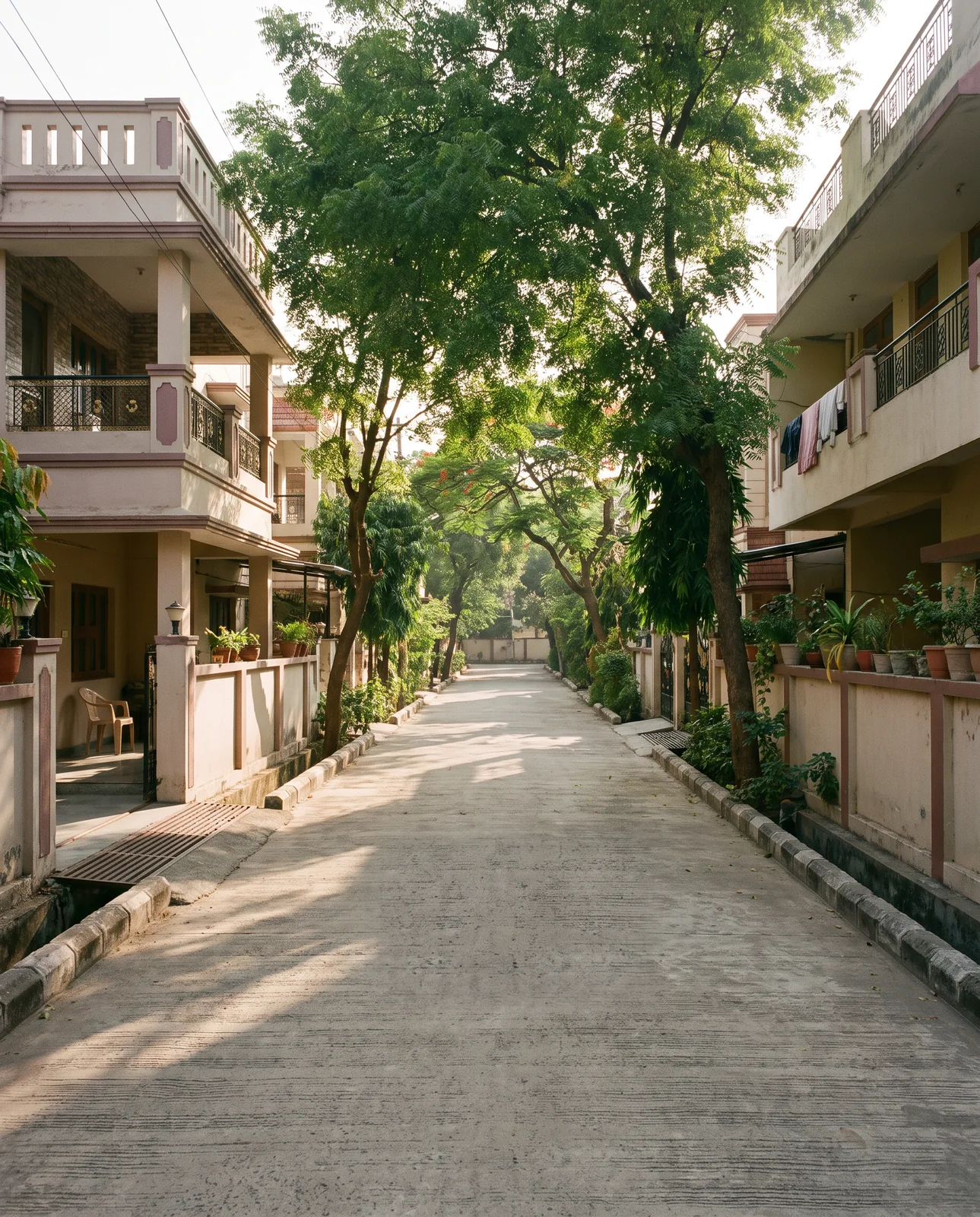
Five things to look at on that walk
Take the sanctioned layout of that older colony with you if you can, and look for what it promised.
- The roads, to the far end. Not the entrance road, which is always the best one. Walk to the last row of plots and see where the surface stops.
- The open space on the layout. Every sanctioned layout sets land aside for a garden and public use. Is it a garden today, or has it become plots?
- The drains, and where they empty. Lined, covered and connected to something — or an open trench that ends at the boundary wall.
- Street lighting and the electricity poles. Poles standing is not the same as poles working. Go back once after dark.
- Water, and who supplies it. A line that was laid and connected, or a tanker that comes every morning because the line never arrived.
The harder question: what is still unfinished
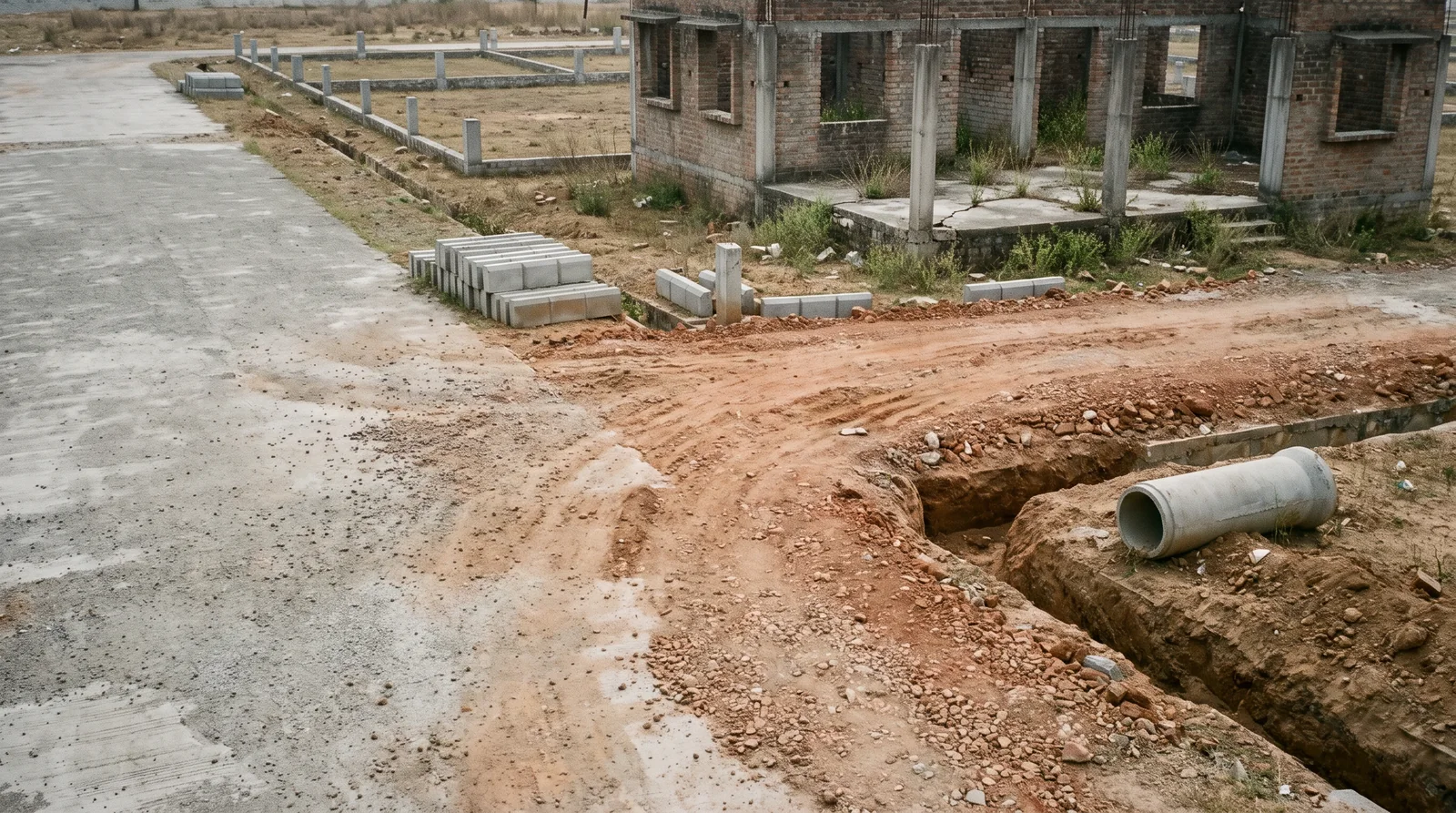
Ask it plainly: what is still incomplete in your earlier projects? Everyone has something. The answer you want is specific — this road, that park, waiting on this connection — not a shrug and not "nothing". Then drive to it and look. An unfinished thing is far easier to read than a finished one, because you can see exactly what was left and how long it has been left.
A developer who cannot name a single outstanding item across every colony they have ever built is telling you something too.
Why the rulebook holds a security at all
Here is a number worth sitting with. Before development work is complete, a coloniser in Madhya Pradesh has to mortgage plots to the municipality equal in value to 125 per cent of the cost of the internal development work, or furnish a bank guarantee of the same amount. The rule exists because the state already knows that some colonies get sold faster than they get built.
So ask which plots stand mortgaged for this colony, or what guarantee was furnished. It is a checkable thing, and a developer who has done it properly will not mind being asked.
क़ानून ने भी मान लिया है: काम अधूरा छूट सकता है।
Qanoon ne bhi maan liya hai: kaam adhoora chhoot sakta hai.
How a colony is meant to end
Development work is not supposed to trail off. It has an end, the end is inspected, and the inspection produces a document. Ask which of the developer's earlier colonies has crossed that line.
- The coloniser reports the work complete. Written information goes to the competent authority once the colony's development work is done.
- It is inspected within fifteen days. A technical officer goes and looks. If the work is found complete, a completion certificate for the development works is issued.
- The colony passes to its residents. On the date that certificate issues, the colony is deemed transferred to the resident welfare association for maintenance.
A developer with a stack of completion certificates has a track record in the plainest sense. One with none, after many colonies, has a question to answer.
Five minutes with somebody who lives there
While you are standing in their older colony, talk to a resident. Nobody there is selling you anything, and it is the same five minutes you would spend asking a neighbour about the street — except that here you are asking about the people who built it.
- How long after possession did the road get finished?
- When something broke, did they come back?
- Who maintains the colony now, and since when?
Two things that prove nothing
Be fair about it, in both directions. "It is their first project" is not a red flag by itself; every developer's first colony was somebody's first colony. It only means the evidence has to come from somewhere else: the sanction, the security posted, the people behind the company. "But it is a big name" is not a guarantee either. A long advertising history is not a track record, and size tells you how much they sell, not how much they finish.
The test that works for both is the same. What did they hand over, and in what condition? A long, boring, complete paper trail is the most flattering thing a developer can have.
बड़ा नाम गारंटी नहीं — और नया नाम इल्ज़ाम नहीं।
Bada naam guarantee nahin — aur naya naam ilzaam nahin.
It is already written down
The developer's name is on the record of every colony they have done, so "what else have they built?" is a search, not a rumour. Each colony's public page carries its boundary, its sanctioned layout, its master-plan zone, its documents and the name of whoever developed it. Start with the one they finished; then decide about the one they are selling.
On the regulator's side, a promoter registering a project has to file a brief account of every project launched in the previous five years — its current status, any delay in completion, and cases pending. Those filings, the quarterly updates and any complaints are public on the MP RERA portal.
See it for yourself on the map — boundaries, plans and paperwork on one screen.
Search the developer's name and open the colonies they have already built →Questions people ask
How do I check a builder's track record in Indore?
Visit a colony they completed years ago and walk it end to end, then search their name on the map to see every colony recorded against them, and read their project filings on the MP RERA portal.
What is a developer legally required to build in a colony in Madhya Pradesh?
The internal development works: roads, open spaces, water supply, electricity and sewerage, under the Colony Development Rules, 2021.
What is the 125 per cent mortgage in the MP colony rules?
Before the development work is complete, the coloniser has to mortgage plots worth 125 per cent of the cost of that work to the municipality, or furnish a bank guarantee for the same amount.
What is a completion certificate for a colony?
The document issued after a technical officer inspects the finished development works. From its date the colony is deemed transferred to the resident welfare association for maintenance.
Is a first-time developer risky?
Not on its own. It means the evidence has to come from the sanction, the security posted and the people behind the company rather than from earlier colonies.
Does RERA show a promoter's earlier projects?
Yes. A promoter registering a project files details of every project launched in the previous five years, including status, delays and pending cases, and these are public on the portal.
Where the facts come from. The facts and figures in this post come from verified government sources and verified RERA-registered brokers.
Indori Zameen is a private platform. It is not a government body and is not affiliated with one — always confirm a record with the concerned authority before you commit money.
Share this post
Related posts
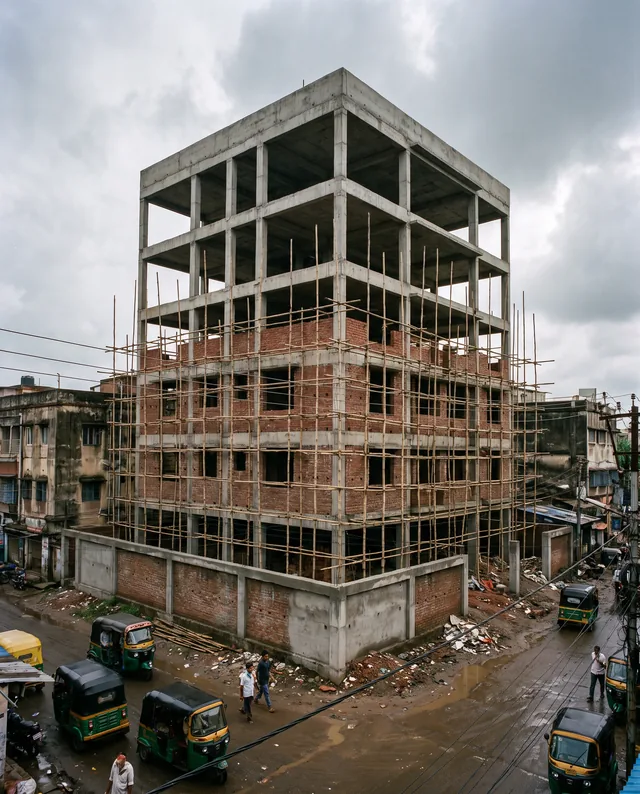 Papers & law7 min read
रजिस्टर्ड है — पर किसका?
Papers & law7 min read
रजिस्टर्ड है — पर किसका?
What RERA does, and what it does not
Who must register with MP RERA, what an agent's number means, and the four checks a registration does not replace: title, ownership, coverage and sanction.
8 Sep 2025 Buying guides9 min read
दो सौदे, एक ज़मीन
Buying guides9 min read
दो सौदे, एक ज़मीन
Buying from a developer vs an individual owner
A developer sells you a project and a promise; an owner sells you one parcel and its paper trail. The questions for each, and the three that never change.
8 Sep 2025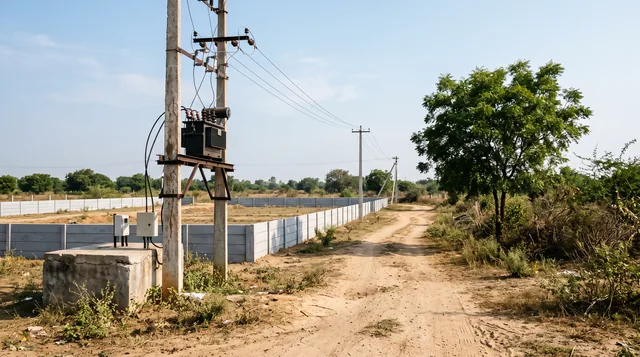 Buying guides8 min read
सुविधा है या वादा?
Buying guides8 min read
सुविधा है या वादा?
Is the colony serviced? Power, water, sewer
A gate, a road and a wall can be finished years before a working connection. Six questions and one visit after dark tell you what you are really buying.
8 Sep 2025 Maps & plans7 min read
वादा अलग चीज़ है। नक्शा अलग।
Maps & plans7 min read
वादा अलग चीज़ है। नक्शा अलग।
Promised vs sanctioned: the brochure and the layout plan
Why a brochure binds nobody and a sanctioned layout does, what reserved land looks like on the sheet, and the one question to ask when the amenity is not on it.
8 Sep 2025Tagged developer, rera, checklist, instagram-series, site-visit, layout-plan.
Read it. Then check it on the map.
Every colony's boundary, its approved layout, its zoning and its paperwork — on one screen. Signing in is free.